A Ball Of Mass M Moving With Velocity V

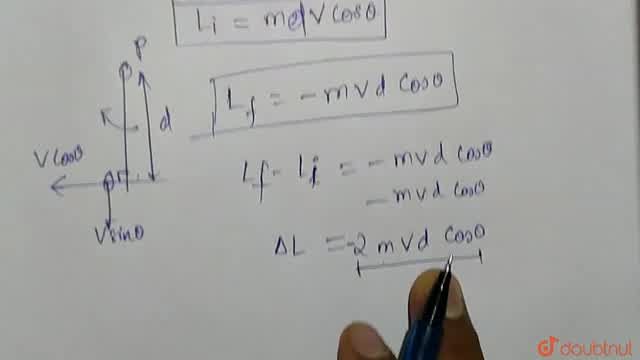
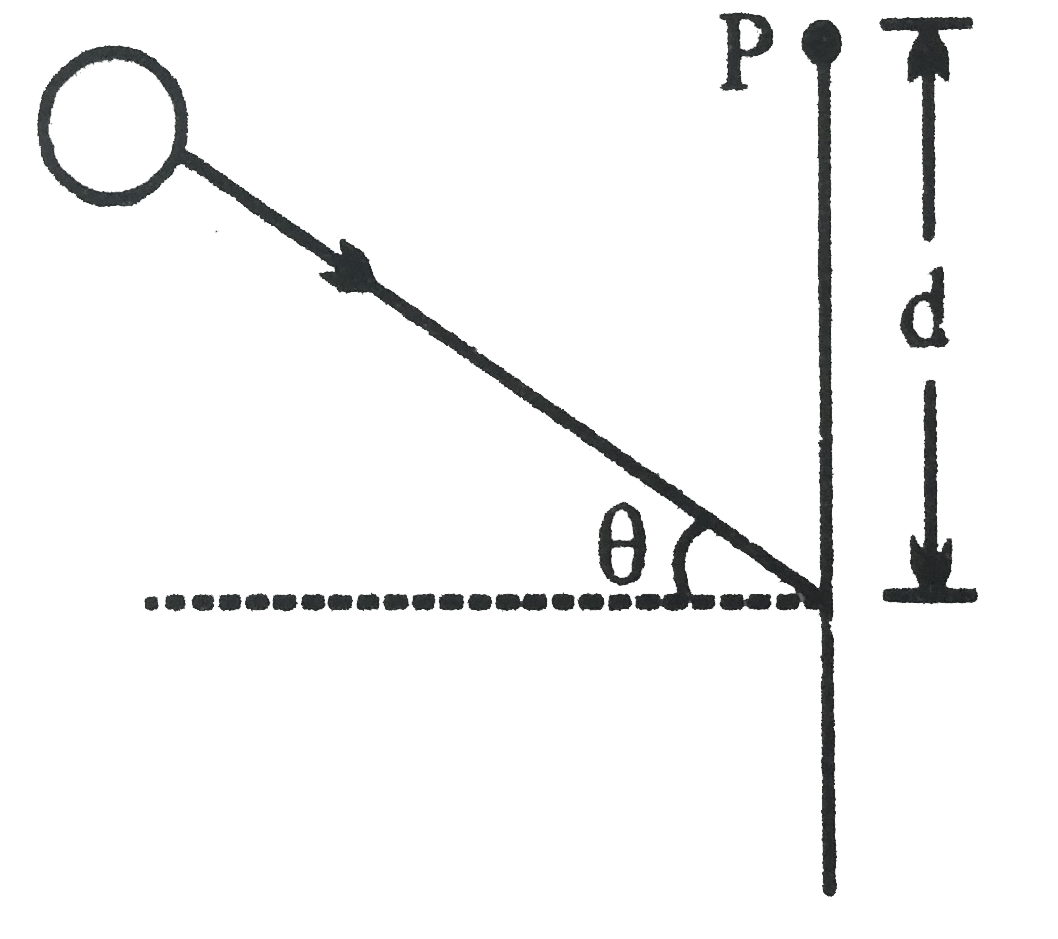
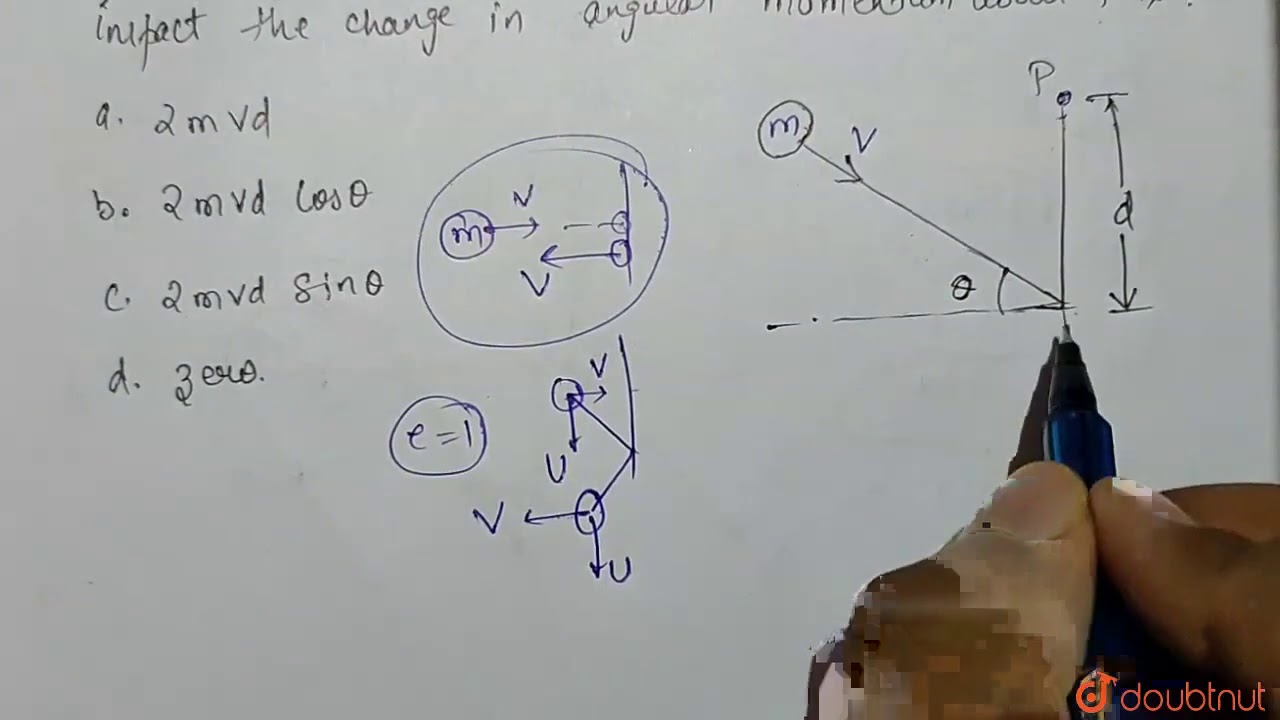
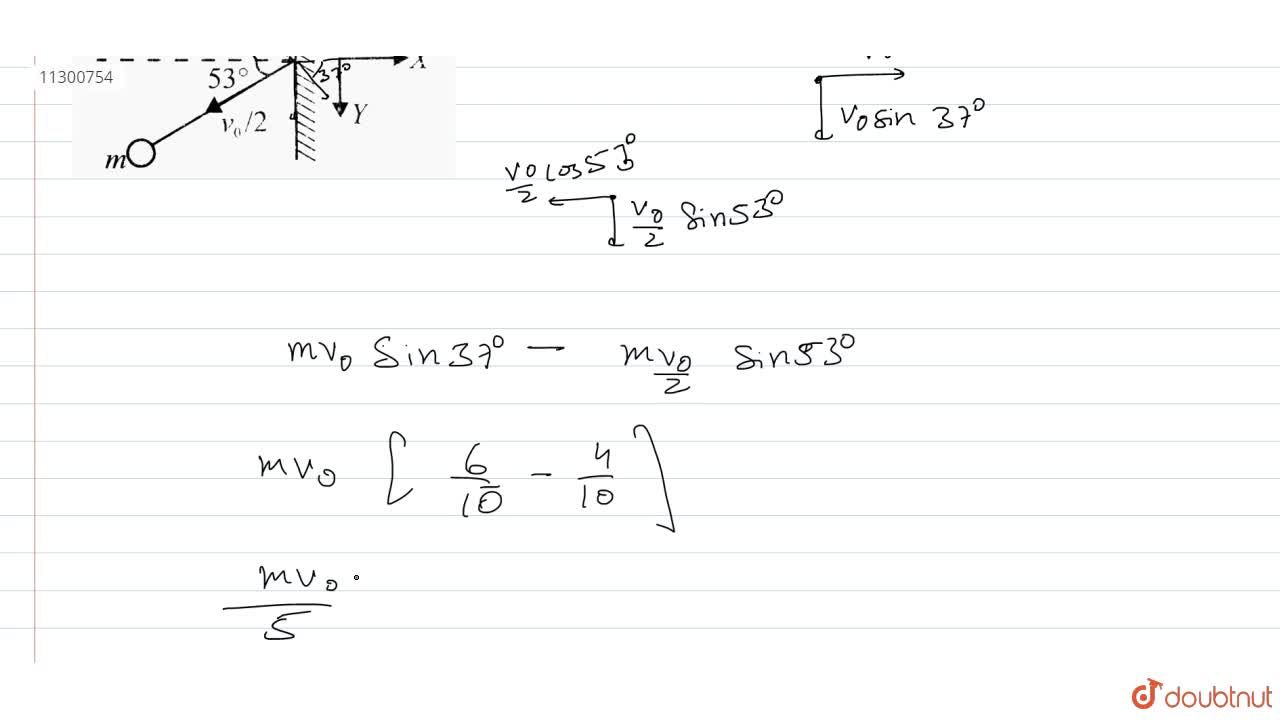
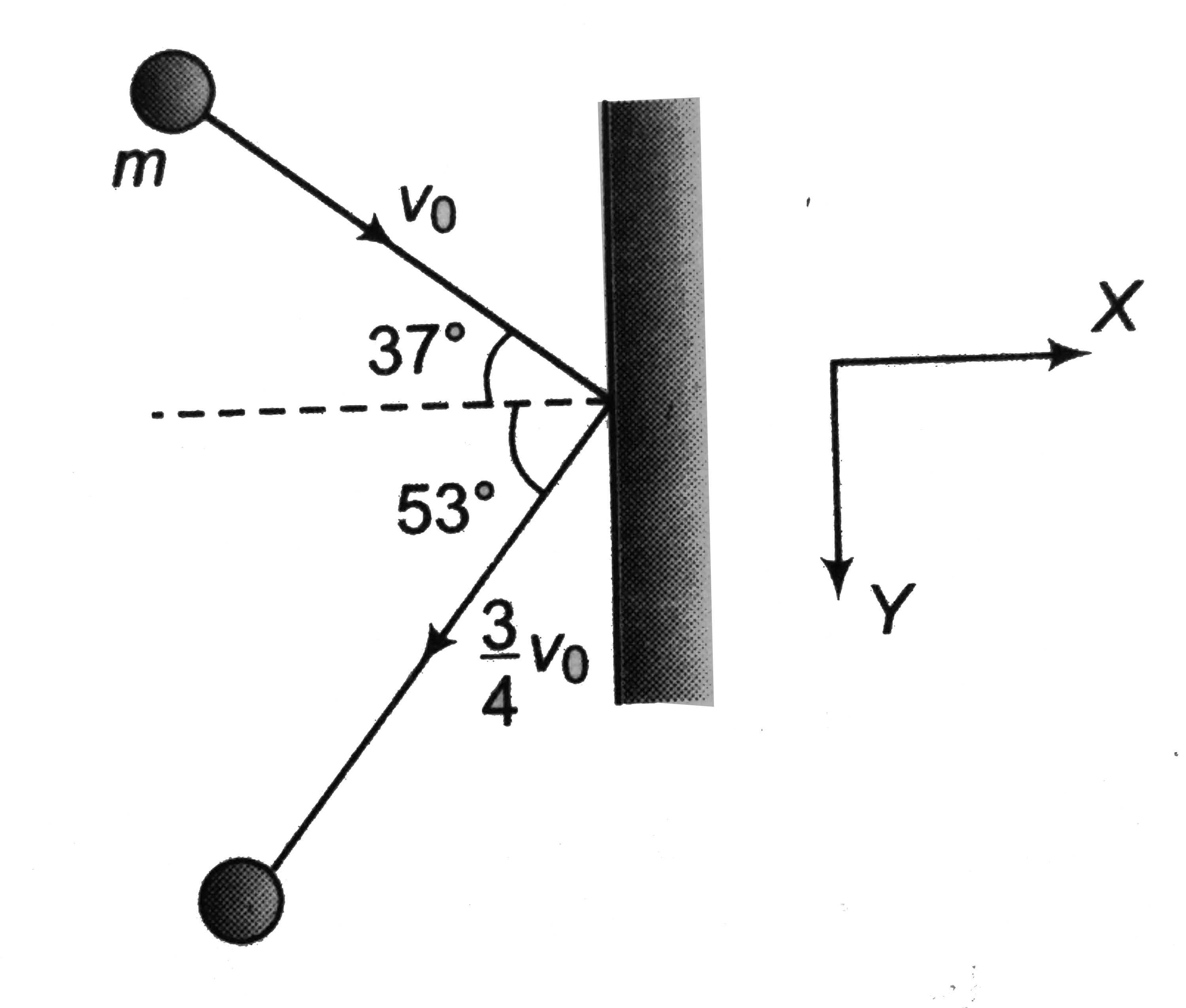
A ball of mass m moving with velocity v , collide with the wall elastically as shown in the figure. After impact the change in angular momentum about P is : Class 11.. A ball...
Kula o masie M, poruszająca się z prędkością V, wykonuje ruch po liniowej trajektorii, która może być określona jako prosta lub złożona. Prędkość zmienia się w zależności od kierunku i siły działającej na kulę, czyli siły odśrodkowej, siły wyporu i siły grawitacji. Kula ma stałą przyśpieszenie w kierunku wektora prędkości, co oznacza, że jej trajektoria zmienia się zgodnie z prawem F = ma.
Aby ustalić trajektorię kuli o masie M, poruszającej się z prędkością V, należy obliczyć trzy elementy: położenie, prędkość i przyśpieszenie kuli w danej chwili. Położenie można określić za pomocą wzoru: x = x0 + vt, gdzie x0 jest położeniem kuli w czasie t = 0. Prędkość kuli można określić za pomocą wzoru v = v0 + at, gdzie v0 jest prędkością kuli w czasie t = 0. Przyśpieszenie kuli można wyznaczyć jako wynik działania sił wyporu, siły odśrodkowej i siły grawitacji.
Aby obliczyć trajektorię kuli, należy wykonać następujące kroki:
- Ustalić położenie, prędkość i przyśpieszenie kuli w czasie t = 0.
- Obliczyć położenie kuli w czasie t za pomocą wzoru x = x0 + vt.
- Obliczyć prędkość kuli w czasie t za pomocą wzoru v = v0 + at.
- Obliczyć przyśpieszenie kuli w czasie t jako wynik działania sił wyporu, siły odśrodkowej i siły grawitacji.
- Użyć powyższych wzorów do obliczenia położenia, prędkości i przyśpieszenia kuli w każdym punkcie czasu.
- Narysować trajektorię kuli na wykresie.
Kiedy trajektoria kuli jest znana, można obliczyć jej energie kinetyczną i potencjalną, jak również wyznaczyć pola sił, które wpływają na jej ruch. Obliczenia te są niezbędne do zrozumienia zjawiska ruchu kuli o masie M i prędkości V.
A ball of mass m moving with velocity v , collide with the wall elastically as shown in the figure. After impact the change in angular momentum about P is : Class 11.. A ball of mass m moving with velocity v strikes a vertical wall. The angle between the ball's initial velocity vector and the wall is theta_i as shown on the. A ball of mass m moving with velocity strikes a vertical wall. The angle between the ball's initial velocity vector and the wall is as shown on the diagram,.
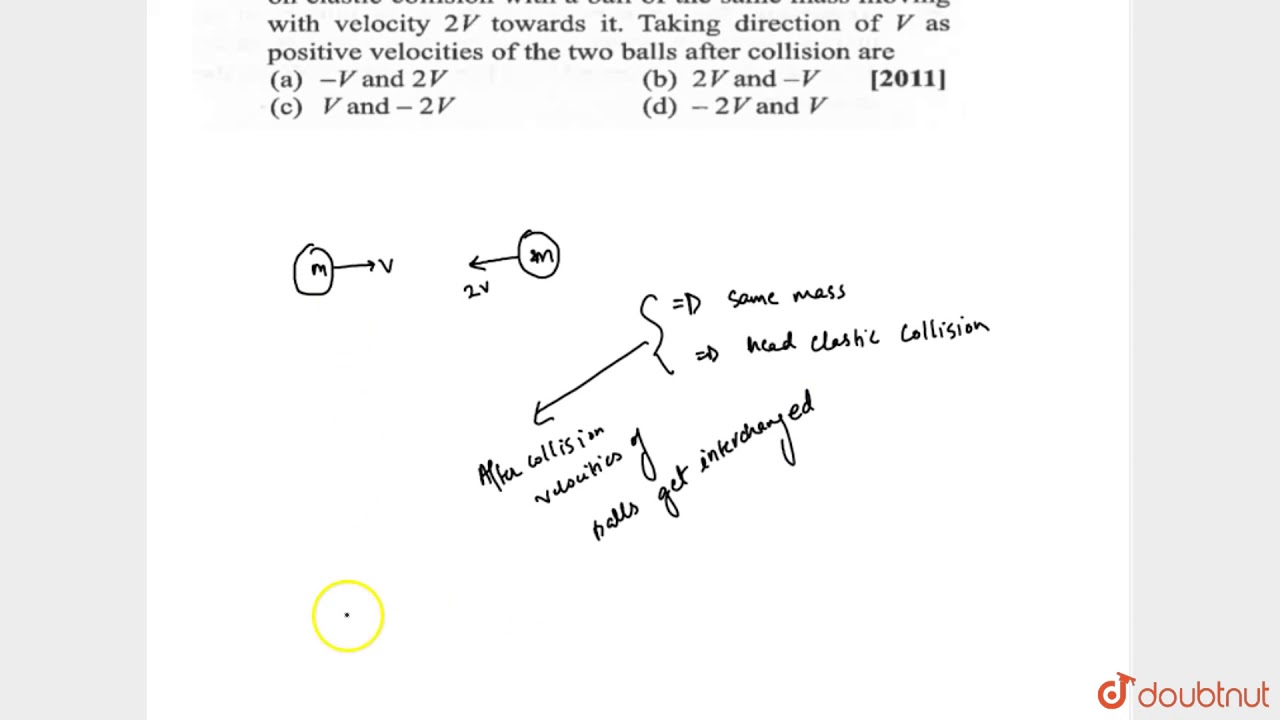
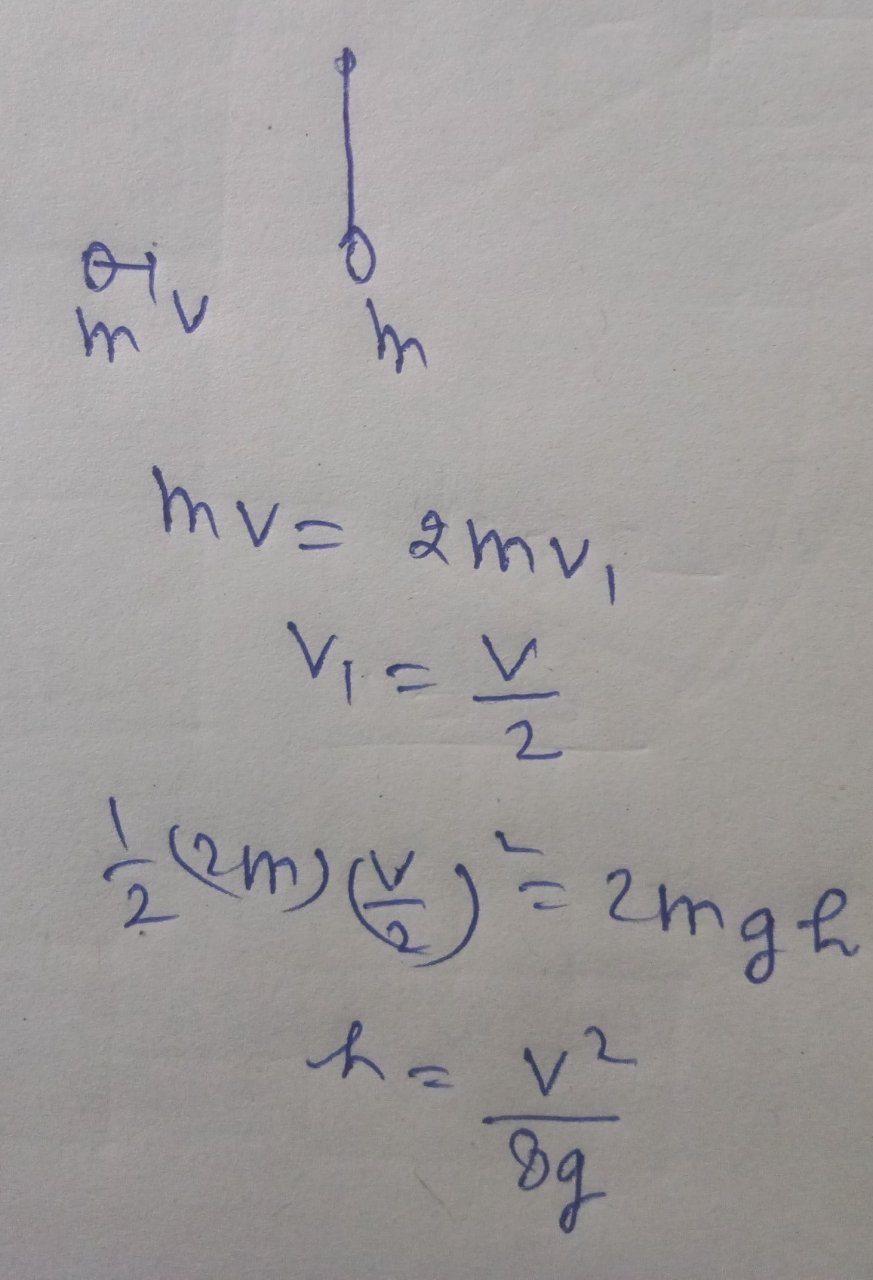
A ball of mass m moving with velocity V, makes a head on elastic collision with a ball of the same mass moving with velocity 2V towards it. Taking direction of V as positive,. A ball of mass m moving with a certain velocity collides against a stationary ball of mass m. Therefore, the masses of both the balls are the same, that. Let mass of ball is m=1kg it's velocity is u=10 m/s, mass of wall M=10,000 kg and velocity is U=0 m/s. After linear collision ball returns with a velocity v=-8 m/s and.
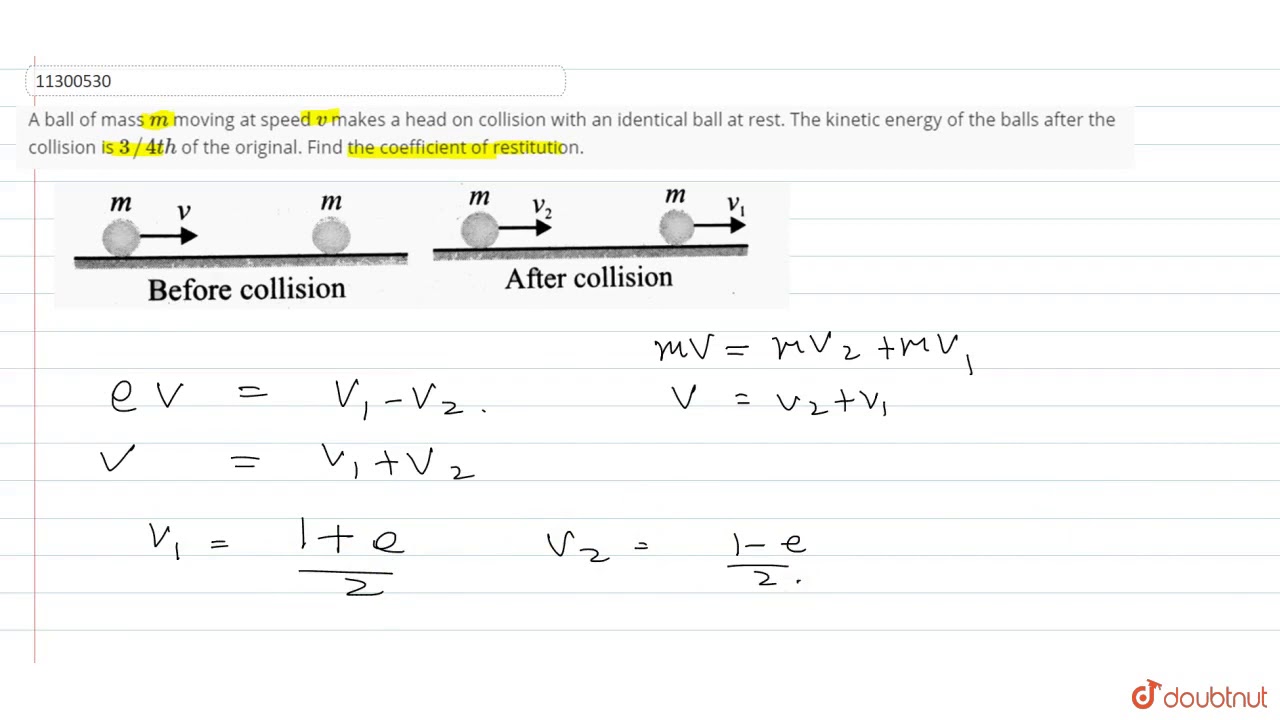
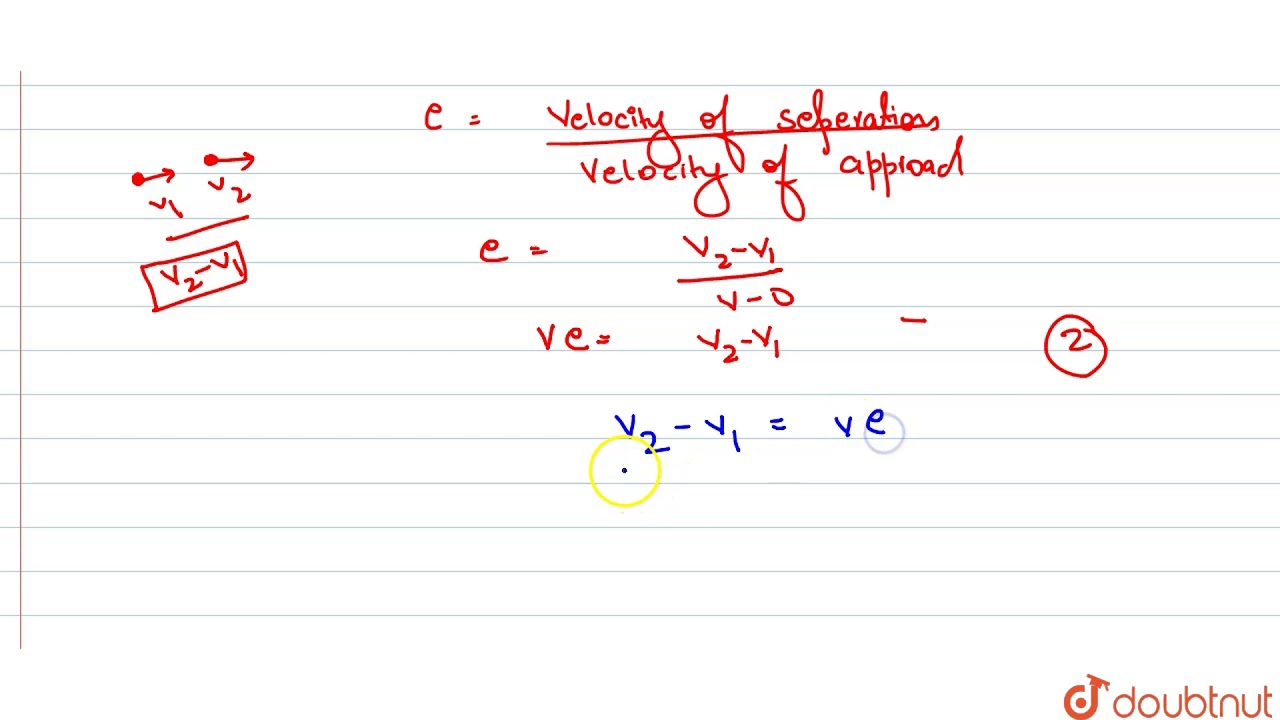
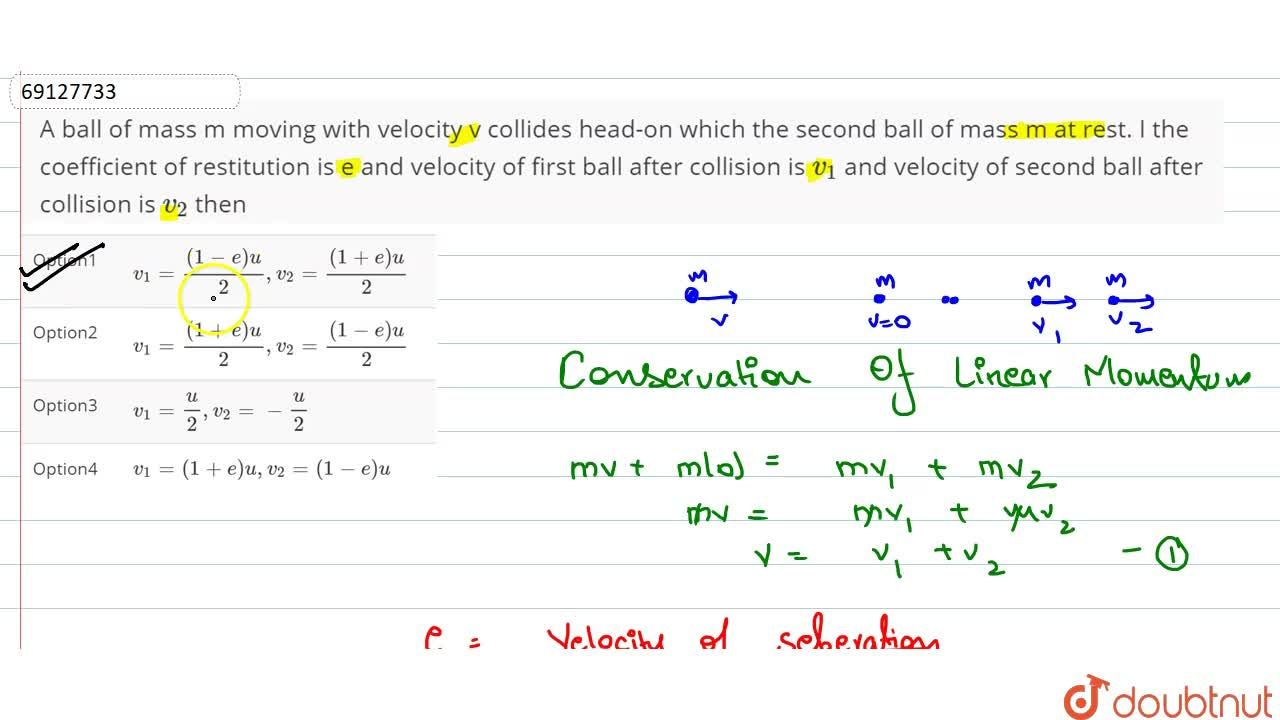
A ball of mass 'm' moving with the velocity v collides head on with another ball of mass m at rest. If the coefficient of restitution is e, then the ratio of the velocities of. From the law of conservation of linear momentum along the direction of incident ball, system consists of colliding ball and sphere, we have. m v o = m v ′ + m. So change in momentum of the wall is +2mu. For heavy wall, the mass will be very high which will produce only very small change in velocity. This will confine to the.
Lets say that the balls travel in the same direction. Then, the momentum of first ball is its mass multiplied by it’s velocity which is 2*8=16kgm/s. Similarly the momentum of the. A ball of mass m traveling horizontally with velocity v strikes a massive vertical wall and rebounds back along its original direction with no change in speed. What is the. Here, a ball of mass M moving with velocity V collides with an identical ball at rest. It is obvious that there is no external force acting on these balls. so we.