Consider The Parametric Equations Below X T2 Y T5

Converting from rectangular to parametric can be very simple: given \(y=f(x)\), the parametric equations \(x=t\), \(y=f(t)\) produce the same graph. As an. In the two-dimensio...
Parametryczne równanie ma wiele zastosowań w matematyce i może być używane do opisania funkcji, krzywych i innych zjawisk matematycznych. Przyjmijmy na przykład parametryczne równanie x = t2 i y = t5. Ten artykuł szczegółowo opisuje, jak interpretować parametryczne równanie x = t2 i y = t5.
Parametryczne równanie to równanie, które ma postać x = f (t) i y = g (t). Tutaj x i y są zmiennymi, a t jest zmienną parametru. W tym przypadku f (t) = t2 i g (t) = t5. Jest to równanie jednej zmiennej, ponieważ zmienna parametru jest jedna.
Aby zinterpretować parametryczne równanie, musimy posłużyć się diagramem wykresu. W tym celu rysujemy wykres dla x i y. Wykres x = t2 przedstawia się jako krzywa paraboli o osi symetrii poziomej. Wykres y = t5 jest wykresem kubicznym o osi symetrii pionowej. Przedstawia to zależność między zmiennymi x i y.
Następnie musimy określić punkty przecięcia dla tych dwóch krzywych. Punkt przecięcia jest miejscem, w którym obie krzywe przecinają się. Punkty przecięcia dla tych dwóch krzywych są (0, 0) i (1, 5). Oznacza to, że dla t = 0, x = 0 i y = 0, a dla t = 1, x = 1 i y = 5.
Możemy również zastosować parametryczne równanie do określenia kierunku, w jakim krzywa się zmienia. Aby dokonać tego, określamy pochodne funkcji x i y. Pochodna funkcji x jest 2t, a pochodna funkcji y jest 5t4. W tym przypadku pochodna funkcji x jest dodatnia, co oznacza, że krzywa jest rosnąca, a pochodna funkcji y jest dodatnia, co oznacza, że krzywa jest rosnąca.
Na koniec możemy użyć parametrycznego równania do określenia prędkości. Prędkość w danym punkcie jest wyznaczana przez pochodną czasu t. Prędkość dla x i y jest odpowiednio 2 i 5t3. Oznacza to, że prędkość x rośnie wraz ze wzrostem t, a prędkość y maleje.
Aby zakończyć, parametryczne równanie x = t2 i y = t5 może być używane do opisywania wielu zjawisk
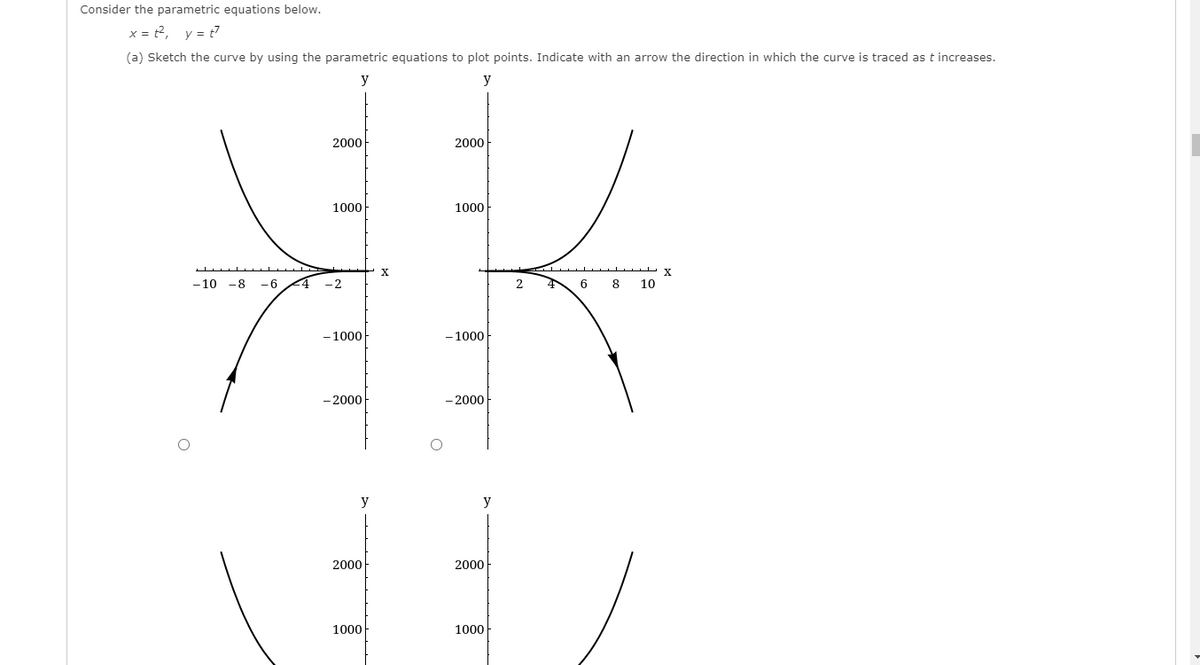
Converting from rectangular to parametric can be very simple: given \(y=f(x)\), the parametric equations \(x=t\), \(y=f(t)\) produce the same graph. As an. In the two-dimensional coordinate system, parametric equations are useful for describing curves that are not necessarily functions. The parameter is an independent variable. Question: Consider the parametric equations below. a) x = t2, y = t7 b) x = t3, y = ln(t) Eliminate the parameter to find a Cartesian equation of the curve for a,b, a) x = t2, y =.
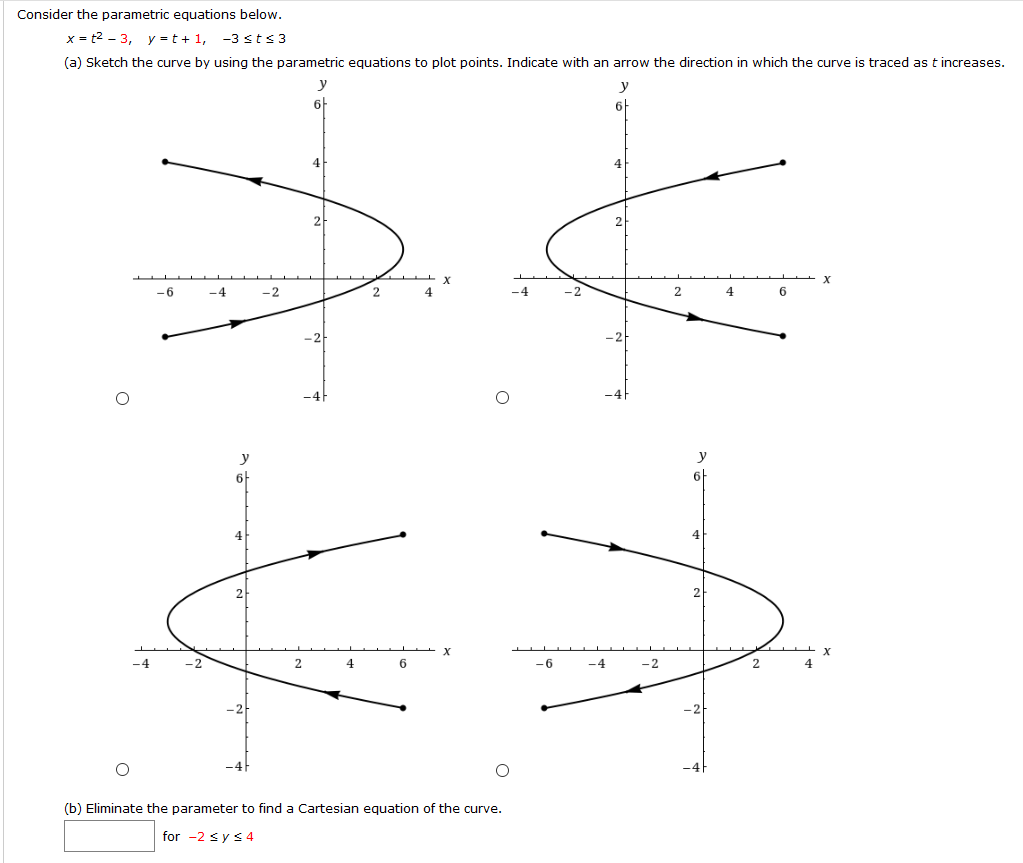
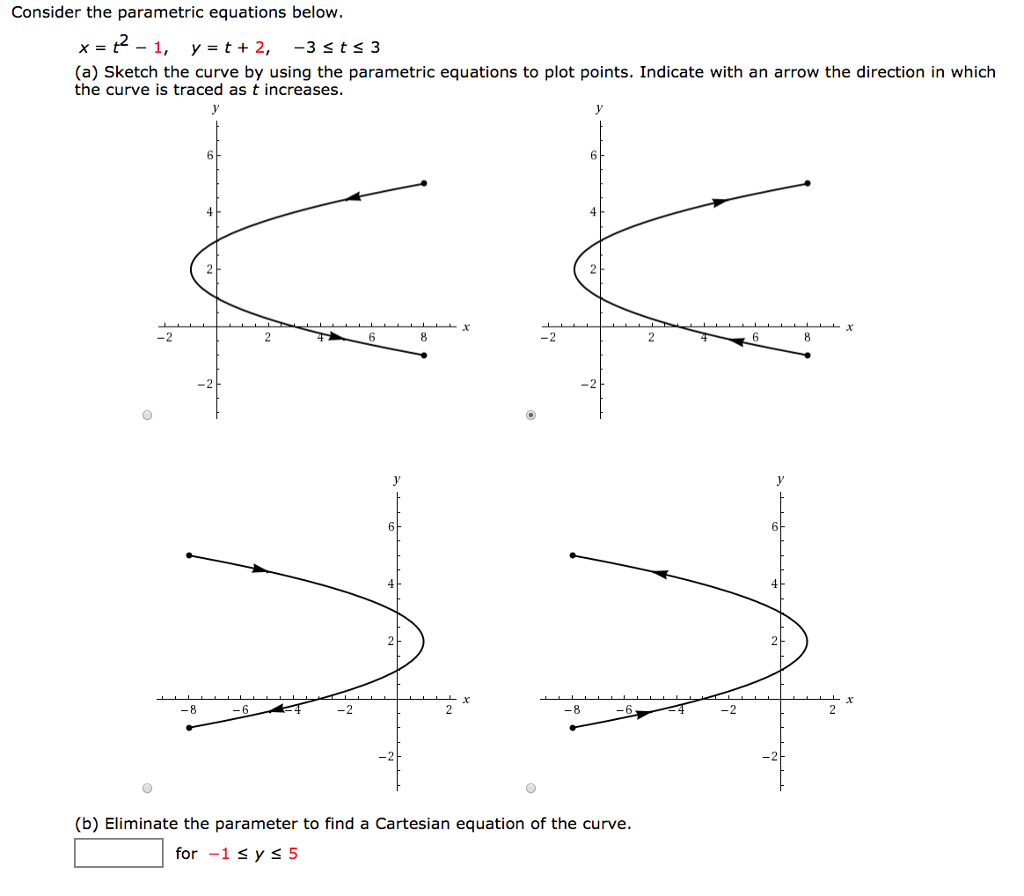
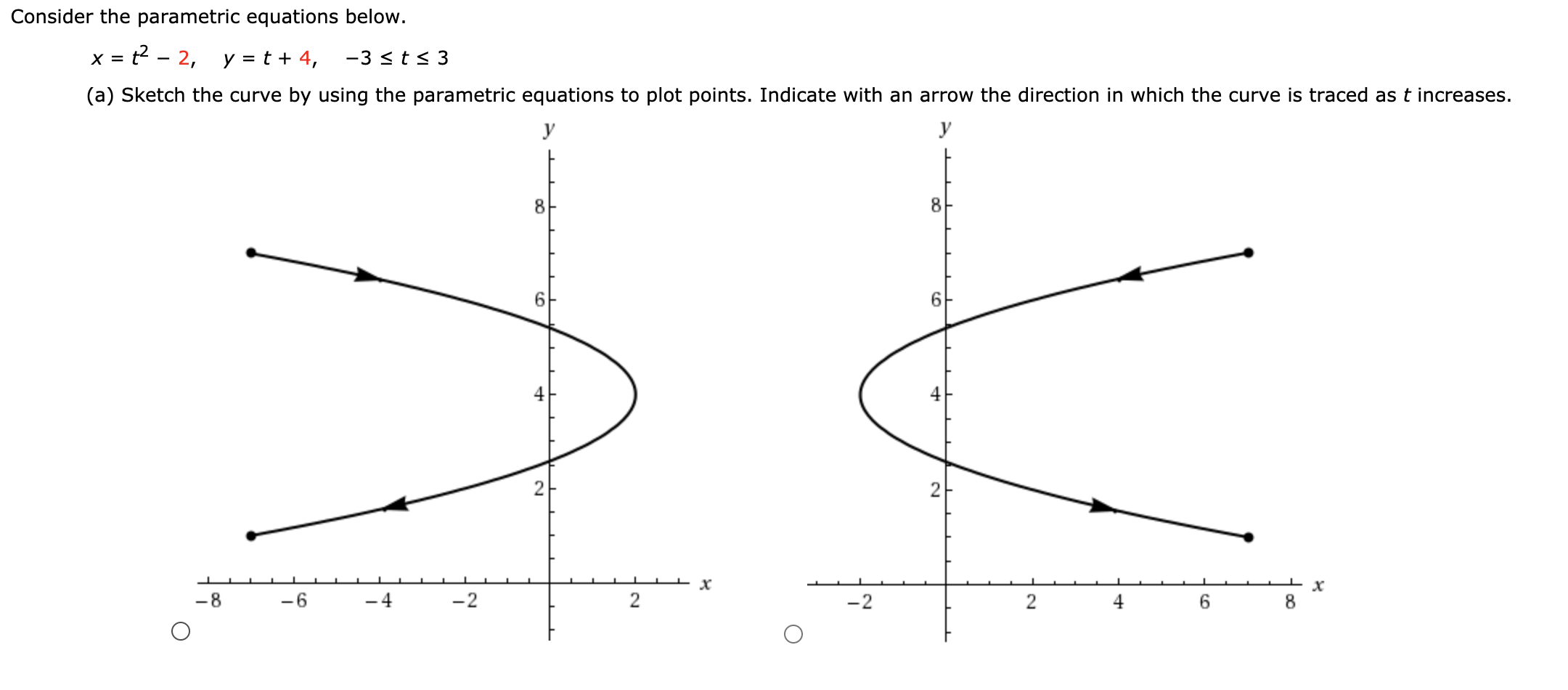
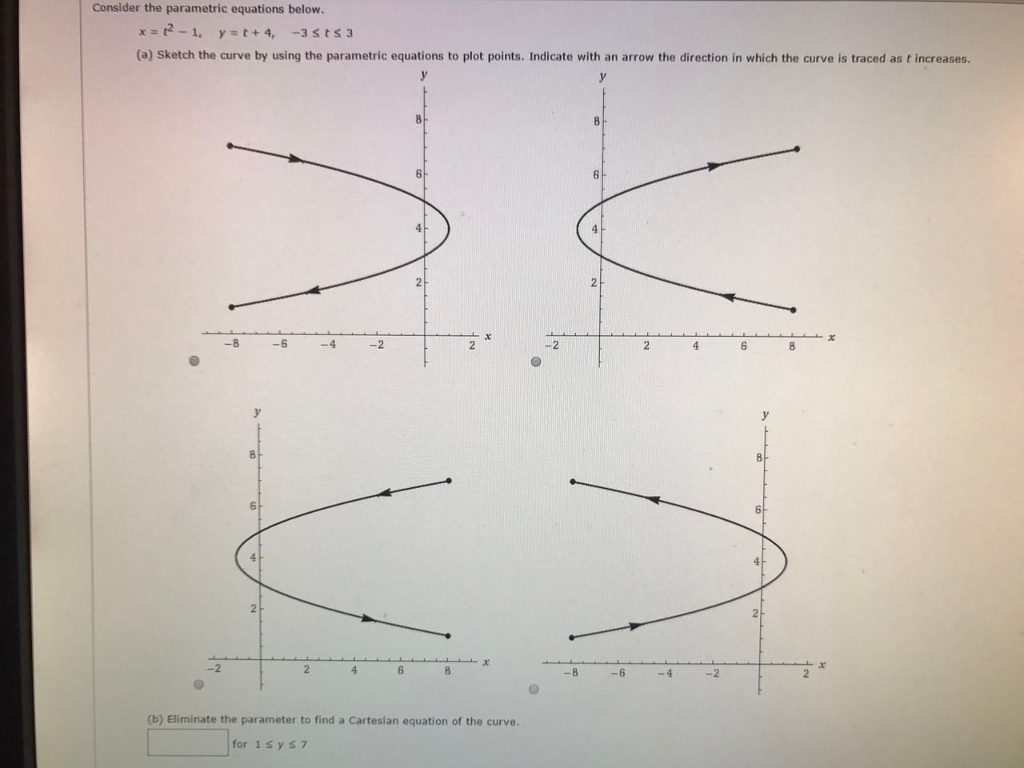
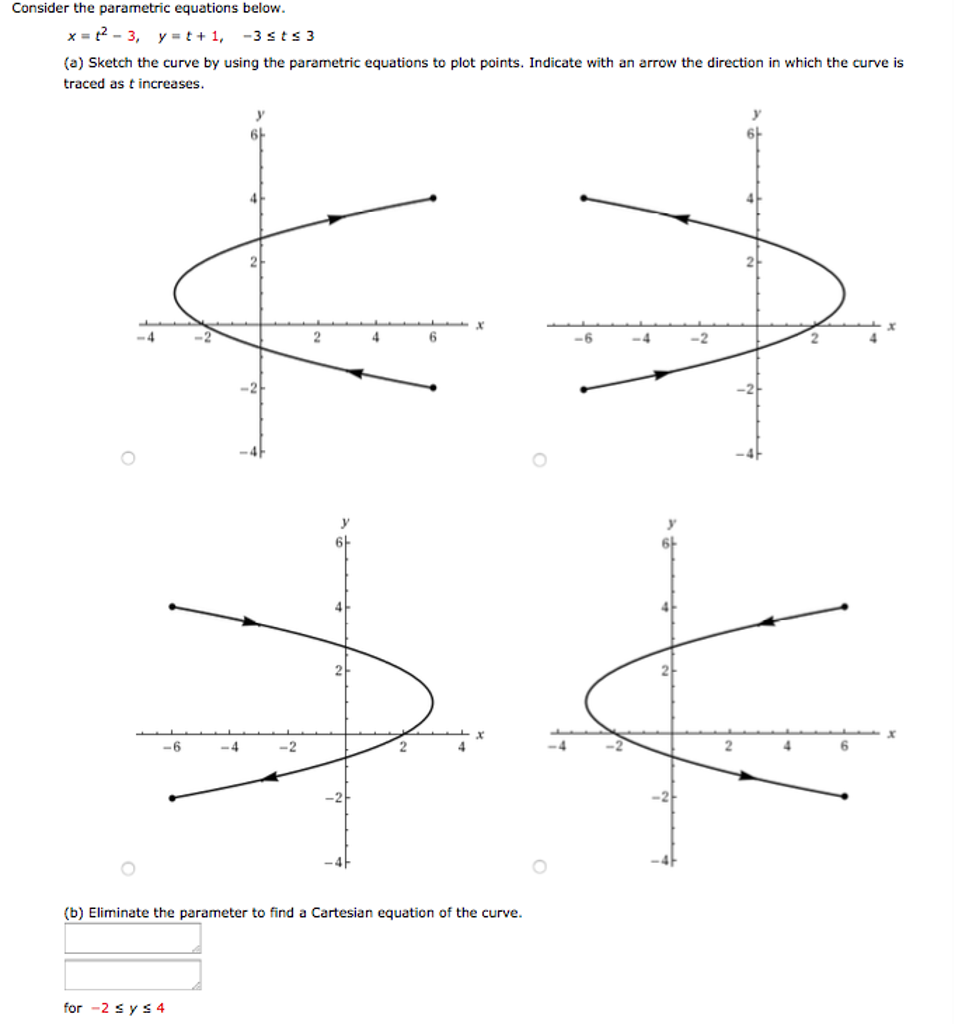
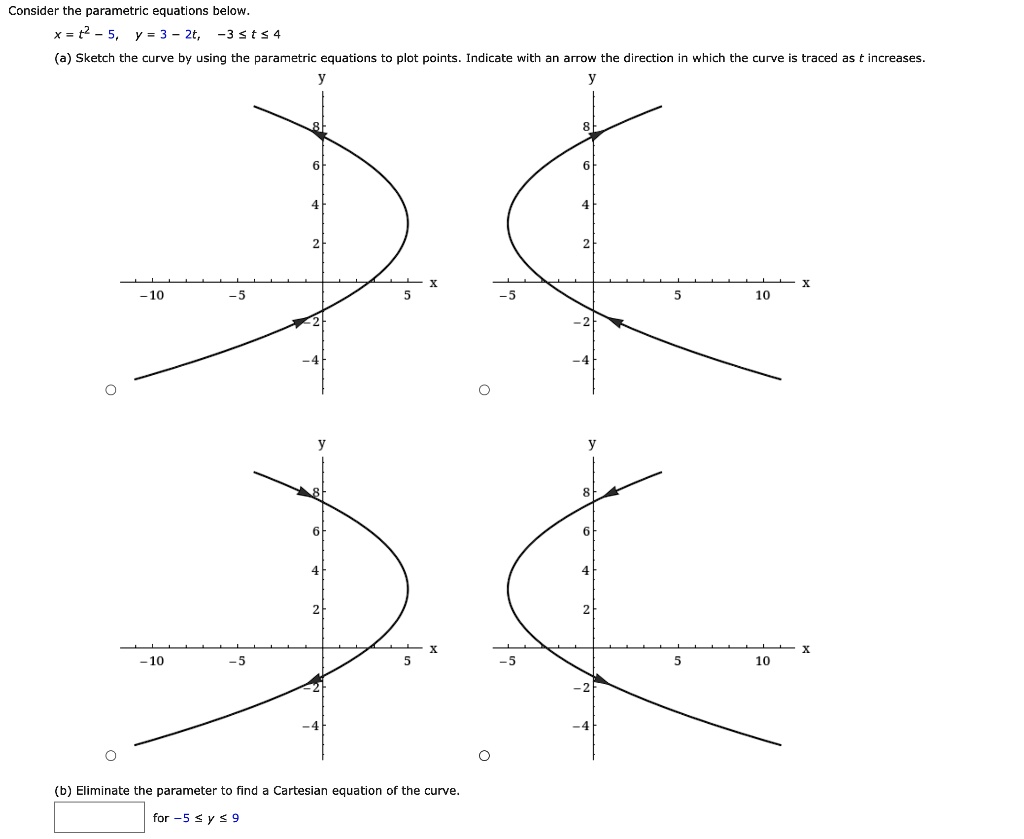
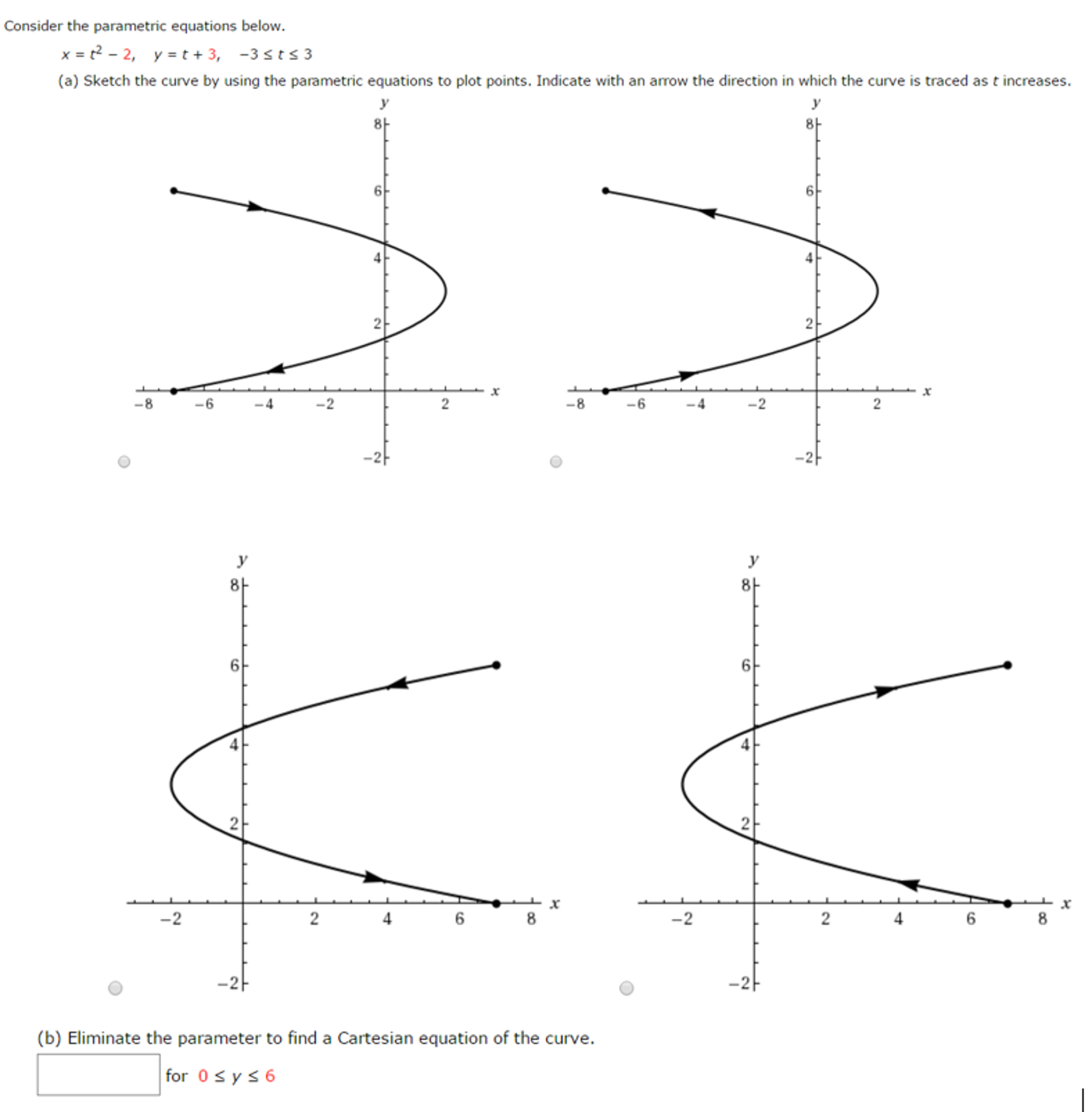
Consider the parametric equations below. x = t2, y = t5 (a) Sketch the curve by using the parametric equations to plot points. Indicate with an arrow the direction in which. Math Calculus Consider the set of parametric equations below: Sx(t) = t2 ly(t) = t10 %3D What are the range of x(t) and y(t) – ie, what are the possible outputs? Give your. Question: Consider the parametric equations below. x = t2 − 1, y = t + 2, −3 ≤ t ≤ 3 (a) Sketch the curve by using the parametric equations to plot points. Indicate with an.
consider the parametric equations below. x = t2, y = t5 (a) Sketch the curve by using the parametric equations to plot points. Indicate with an arrow the direction in which the. Consider the parametric equations below. x = t2 y = t5 (a) Sketch the curve by using the parametric equations to plot points. Indicate with an arrow the direction in which. Consider the parametric equations below: Eliminate the parameter to find a Cartesian equation of the curve. A. x = 4t − 5, y = 3t + 3. B. x = 1 − t 2, y = t − 3, −2 ≤ t ≤ 2. for..
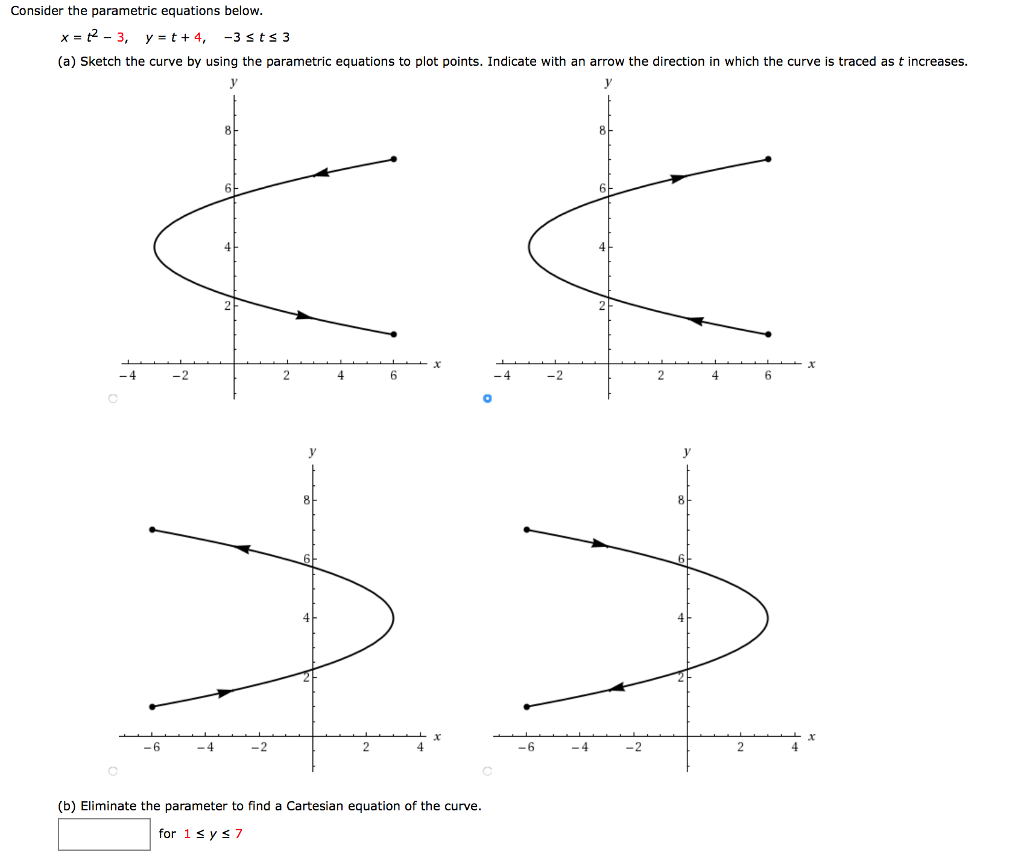
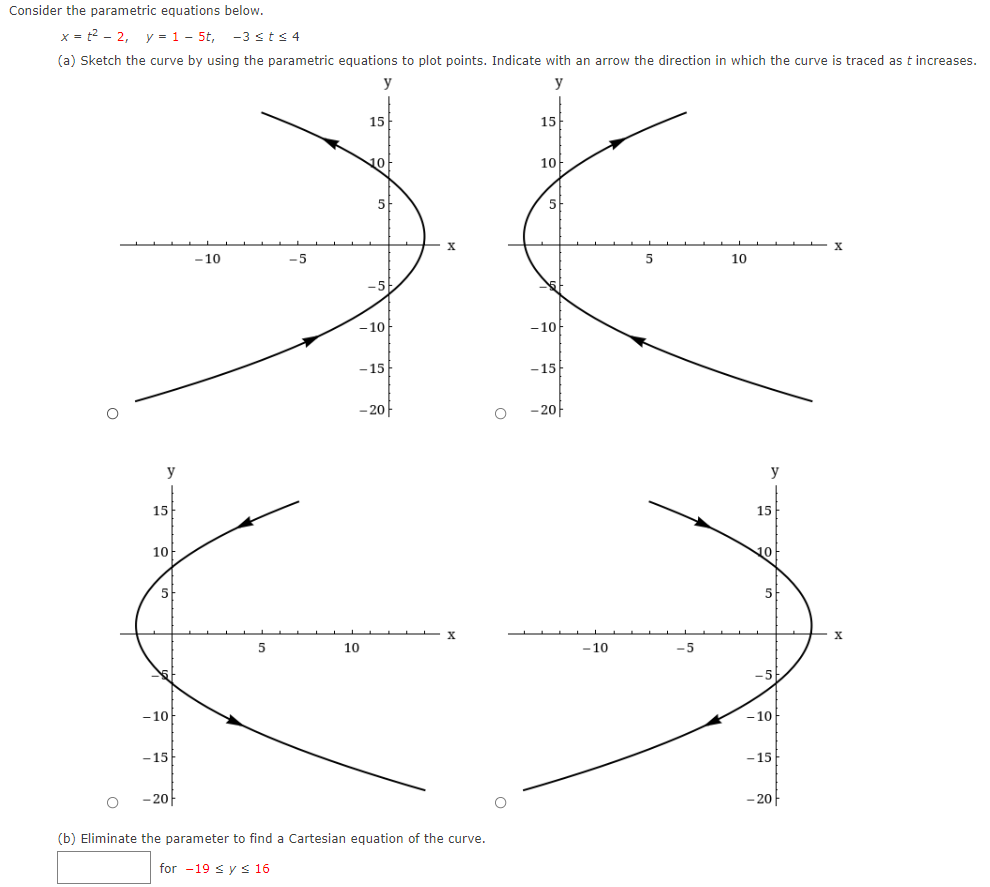
Q: Consider the parametric equations below. X = x = t2 – 1, y = t + 3, -3 <t< 3. Q: Find the equation for the following parametric equation in rectangular coordinates. x = 2t. Consider the parametric equations below. x = t2 − 2, y = 1 − 5t, −3 ≤ t ≤ 4 (a) Sketch the curve by using the parametric equations to plot points. Indicate with an arrow the.