Electric Potential At Midpoint Between Two Charges

An electric dipole is a system of two equal but opposite charges a fixed distance apart. This system is used to model many real-world systems, including atomic and. Charges of...
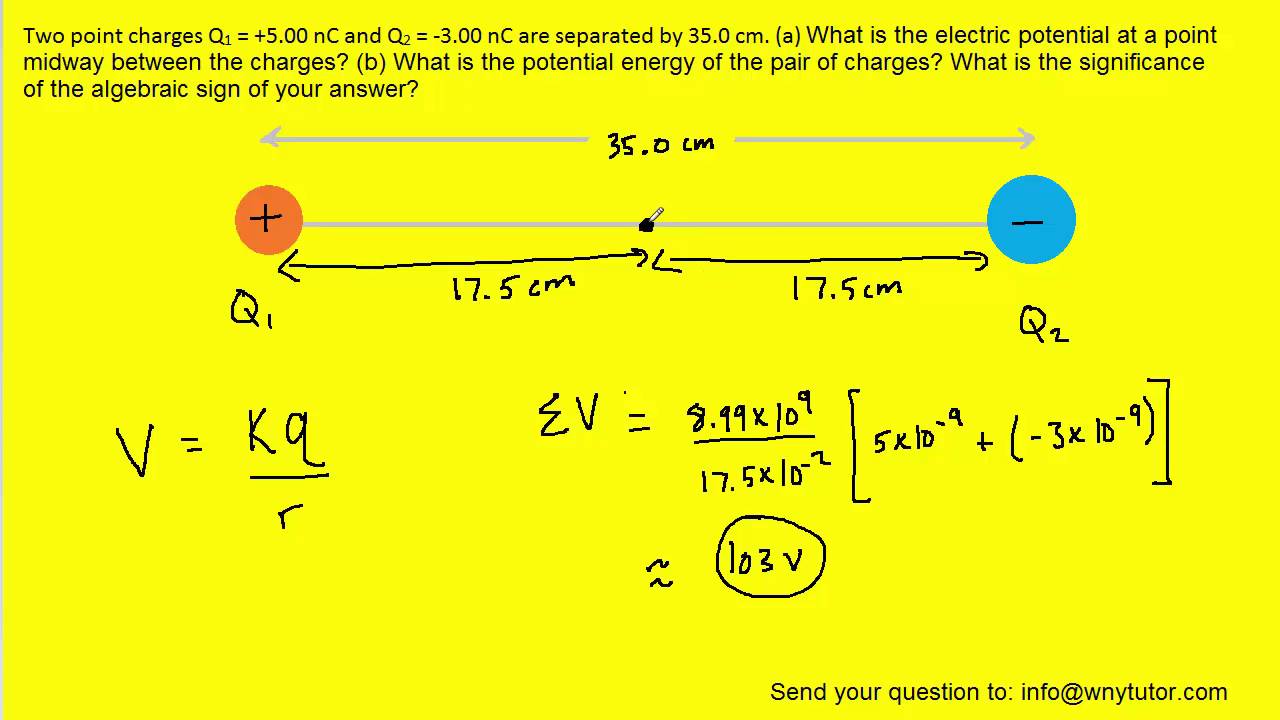
Potencjał elektryczny w punkcie pośrednim między dwoma ładunkami jest ważnym pojęciem w fizyce. Ten artykuł opisuje, jak obliczyć potencjał w punkcie pośrednim dwóch ładunków.
Pierwszą rzeczą, którą należy zrobić, jest obliczenie potencjału elektrycznego dla pierwszego ładunku. Jeśli ładunek jest dodatni, potencjał wynosi V = +kq/r, gdzie k jest stałą Coulomba, q jest ładunkiem pierwszego ładunku, a r jest odległością między punktem pośrednim a pierwszym ładunkiem. Jeśli ładunek jest ujemny, potencjał wynosi V = -kq/r.
Następnie należy obliczyć potencjał dla drugiego ładunku. Jeśli ładunek jest dodatni, potencjał wynosi V = +kq/r, gdzie k jest stałą Coulomba, q jest ładunkiem drugiego ładunku, a r jest odległością między punktem pośrednim a drugim ładunkiem. Jeśli ładunek jest ujemny, potencjał wynosi V = -kq/r.
Potencjał w punkcie pośrednim między dwoma ładunkami jest sumą potencjału pierwszego ładunku i drugiego ładunku. Oznacza to, że potencjał elektryczny w punkcie pośrednim wynosi V = V1 + V2, gdzie V1 jest potencjałem pierwszego ładunku, a V2 jest potencjałem drugiego ładunku.
Istnieją również inne sposoby obliczania potencjału w punkcie pośrednim. Można skorzystać z prawa Gaussa lub sformułować równanie potencjału w postaci sumy potencjału składowych dla każdego ładunku. W obu przypadkach wynikiem będzie to samo.
Jeśli chcesz zobaczyć, jak działa potencjał elektryczny w punkcie pośrednim między dwoma ładunkami, możesz wykonać prosty experiment. Możesz wykonać wykres potencjału w funkcji odległości od ładunków i zobaczyć, jak potencjał zmienia się wraz ze zmianą odległości.
Potencjał elektryczny w punkcie pośrednim między dwoma ładunkami jest ważnym pojęciem w fizyce. Ten artykuł wyjaśnia, jak obliczyć potencjał w punkcie pośrednim dwóch ładunków. Ponadto przedstawiono proste eksperymenty, które można wykona
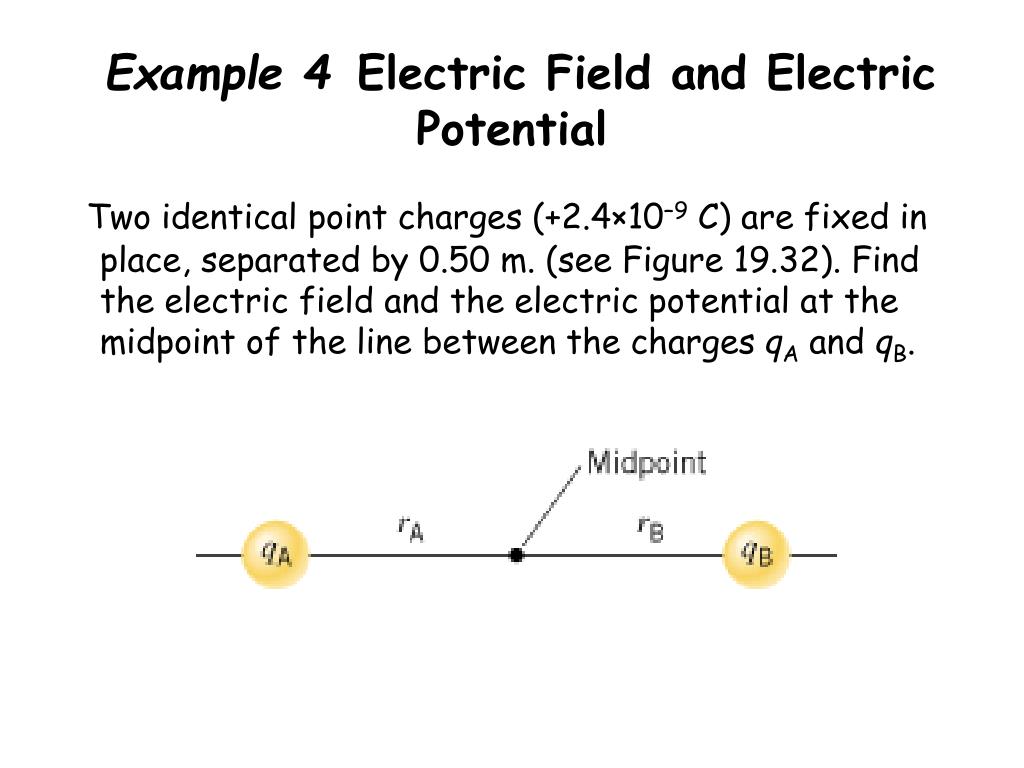
An electric dipole is a system of two equal but opposite charges a fixed distance apart. This system is used to model many real-world systems, including atomic and. Charges of −12.0 nC and −21.0 nC are separated by 0.700 m. What is the potential midway between the two charges? I used the equation V = kq / r for each. Electric Potential, being a scalar quantity at the mid-point between the charges will be twice of the electric potential due to single charges [Alert:- Electric field will be zero.
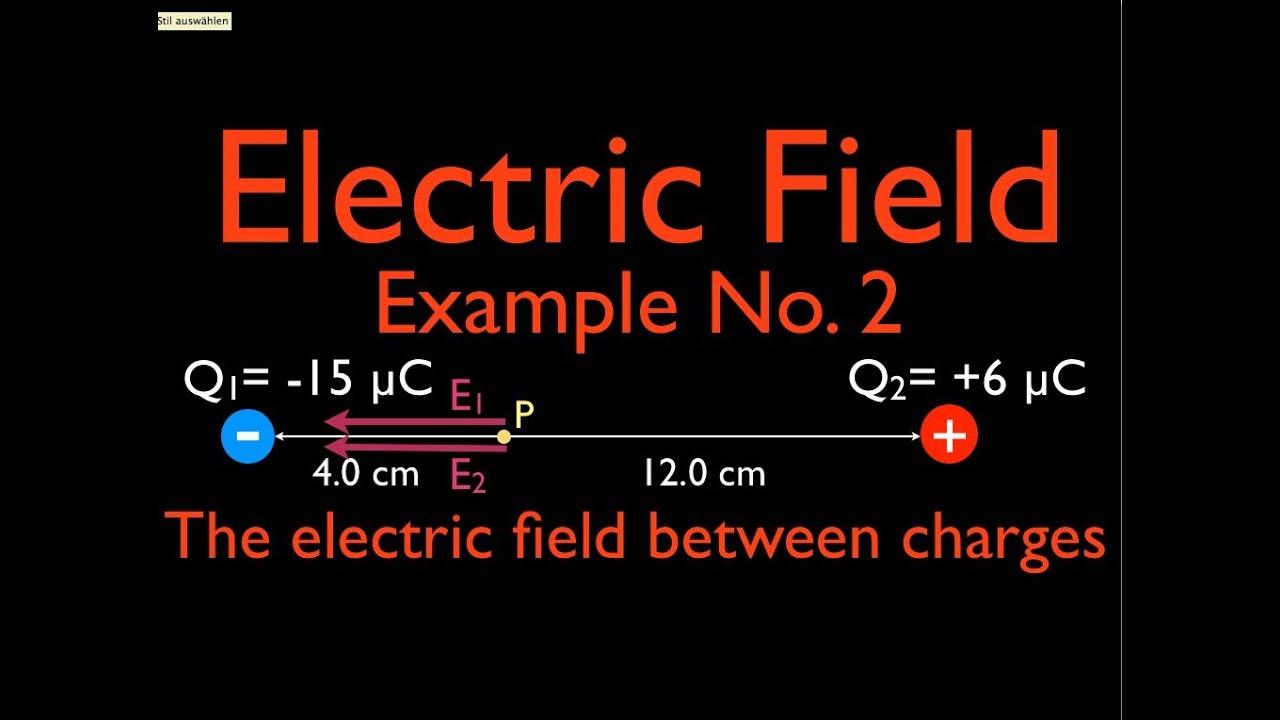
At the midpoint between the charges, the electric potential due to the charges is zero, but the electric field due to the charges at that same point is non-zero as shown below. A point between two charges has an electric potential of zero, but a charge placed at this point will gain kinetic energy. Why? If I have a positive charge of +q and a negative. Electric potential difference also known as voltage is the external work needed to bring a charge from one location to another location in an electric field..
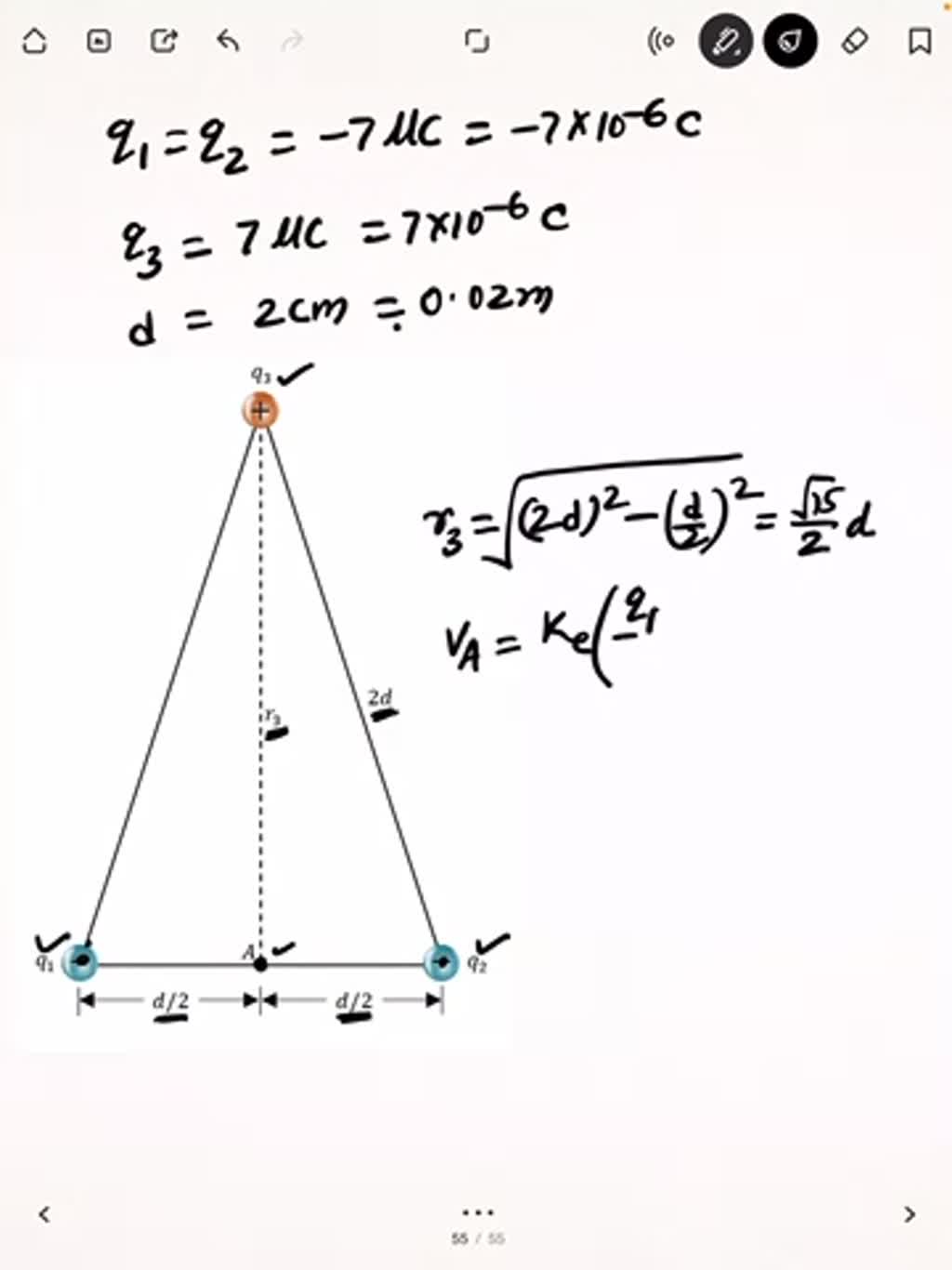
Find the electric field (magnitude and direction) a distance z above the midpoint between two equal charges + q that are a distance d apart (Figure 5.5. 3 ).. How to Calculate the Electric Potential of Two Point Charges in 2D Step 1: Determine the distance of charge 1 to the point at which the electric potential is being. Expert Answer. 22 days ago. Since the magnitude of both the charges is the same. Also, their polarity is the same. Accordingly, the potential of each charge cancels the.
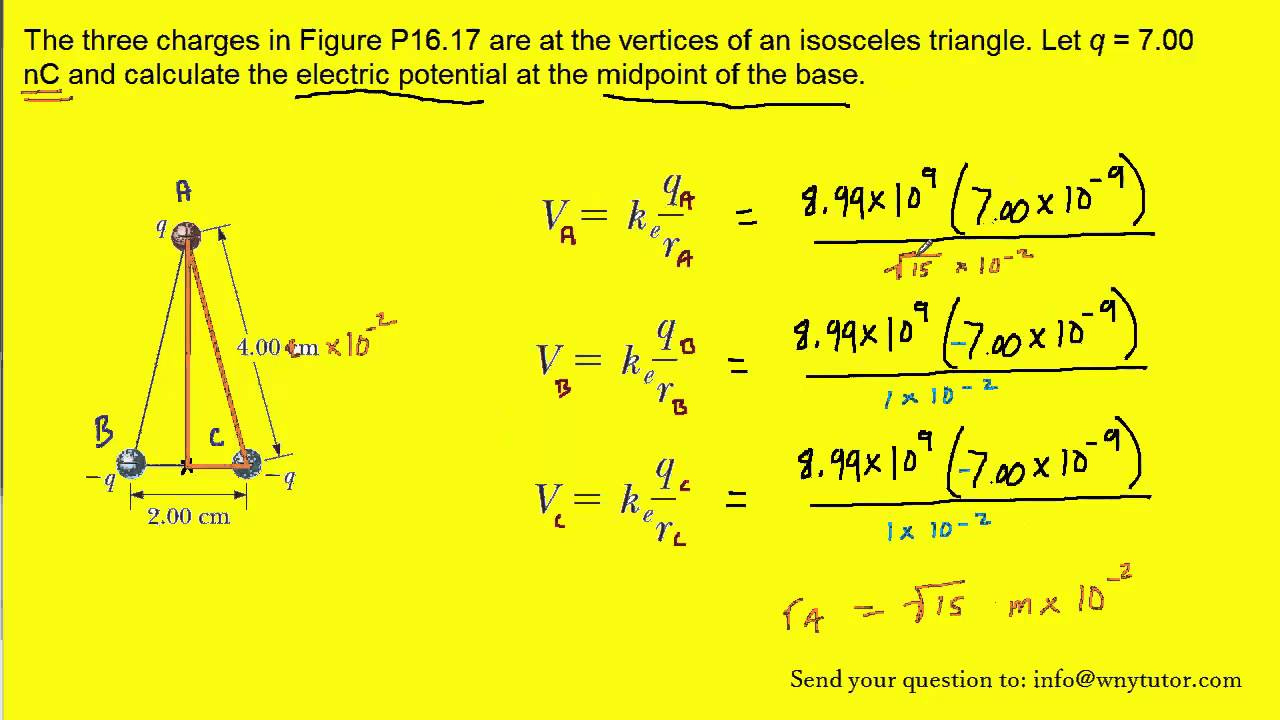
How do you calculate the electric potential at the midpoint between two point charges? Homework Equations The Attempt at a Solution I was asked to. The diagram below shows two point charges-1.2 μC and +1.0 μC separated at a distance of 0.6 m. Point O is the midpoint of the two charges. Calculate the electric potential at.