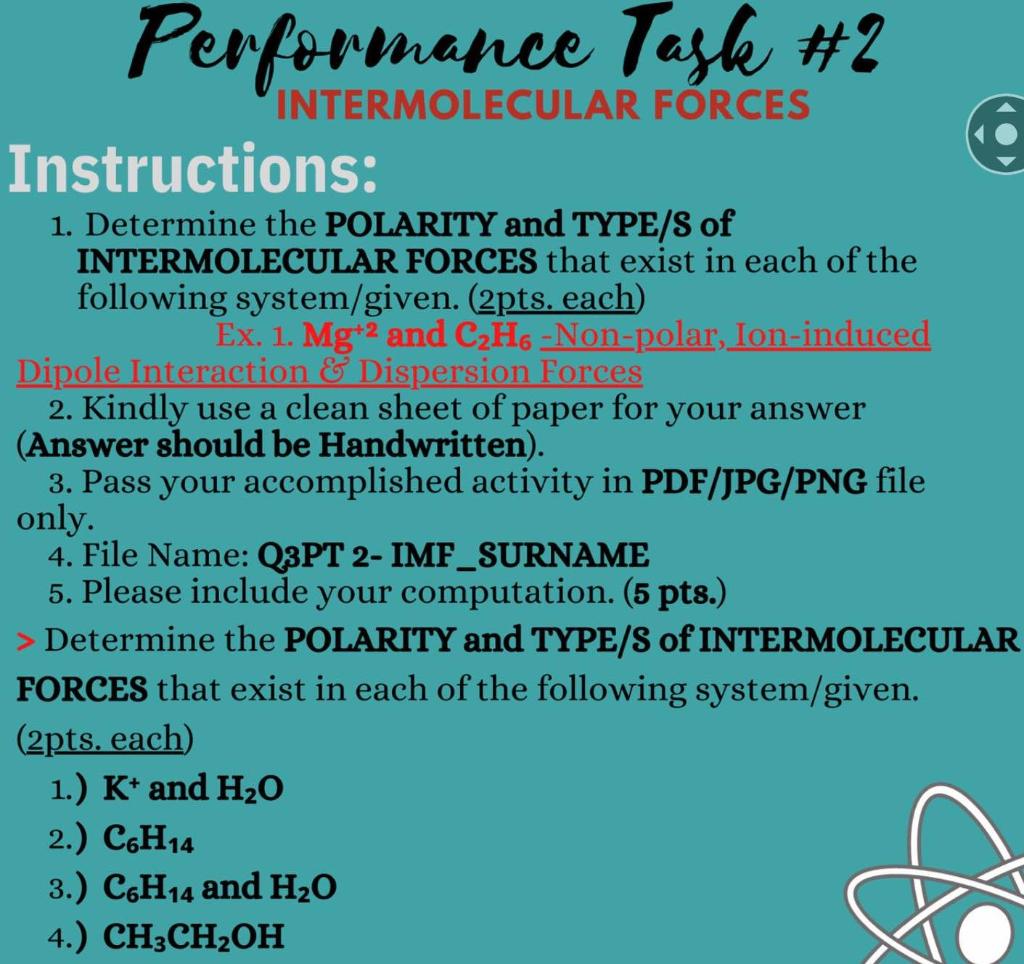
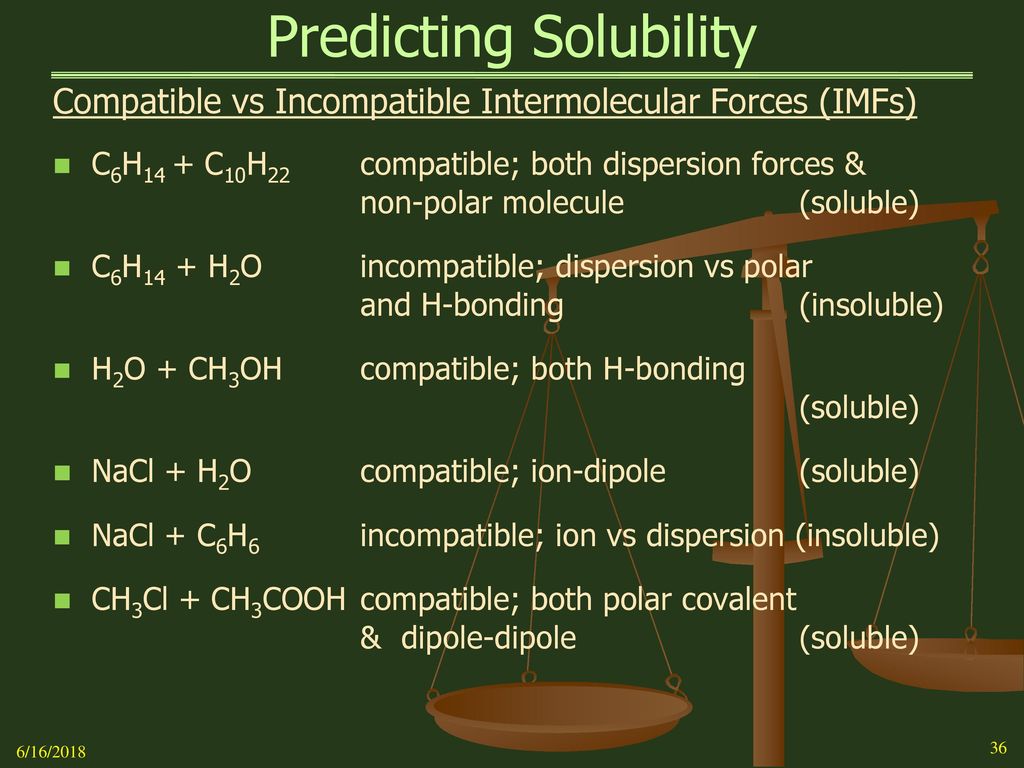
Identify The Types Of Intermolecular Forces Present In C6H14

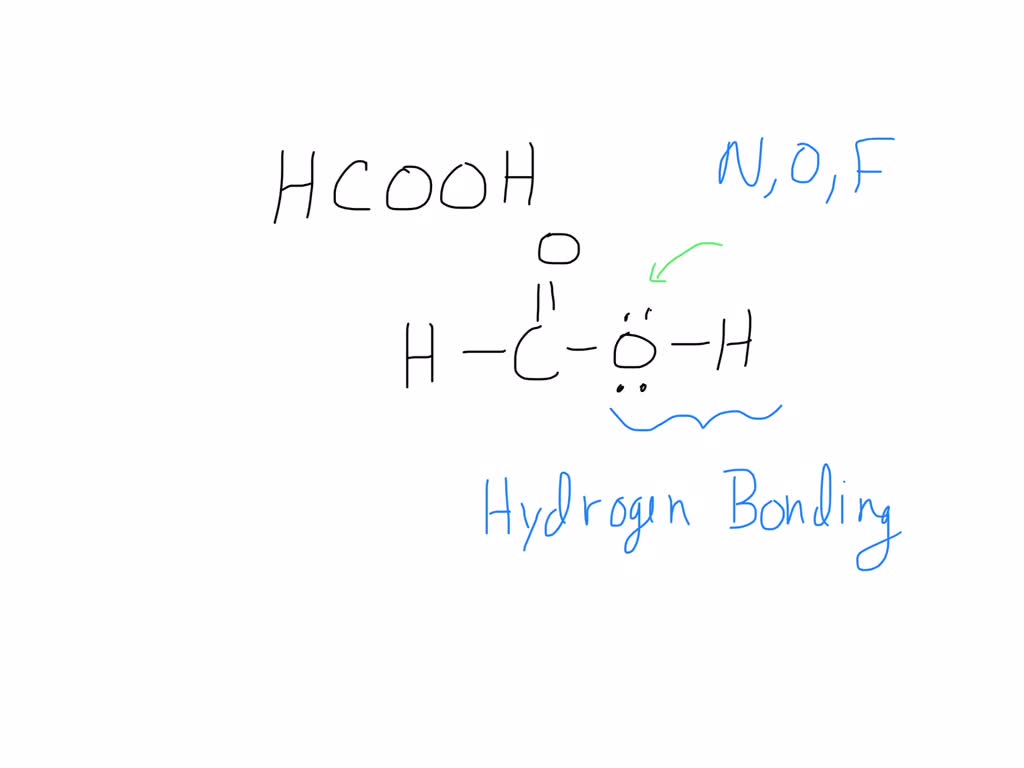
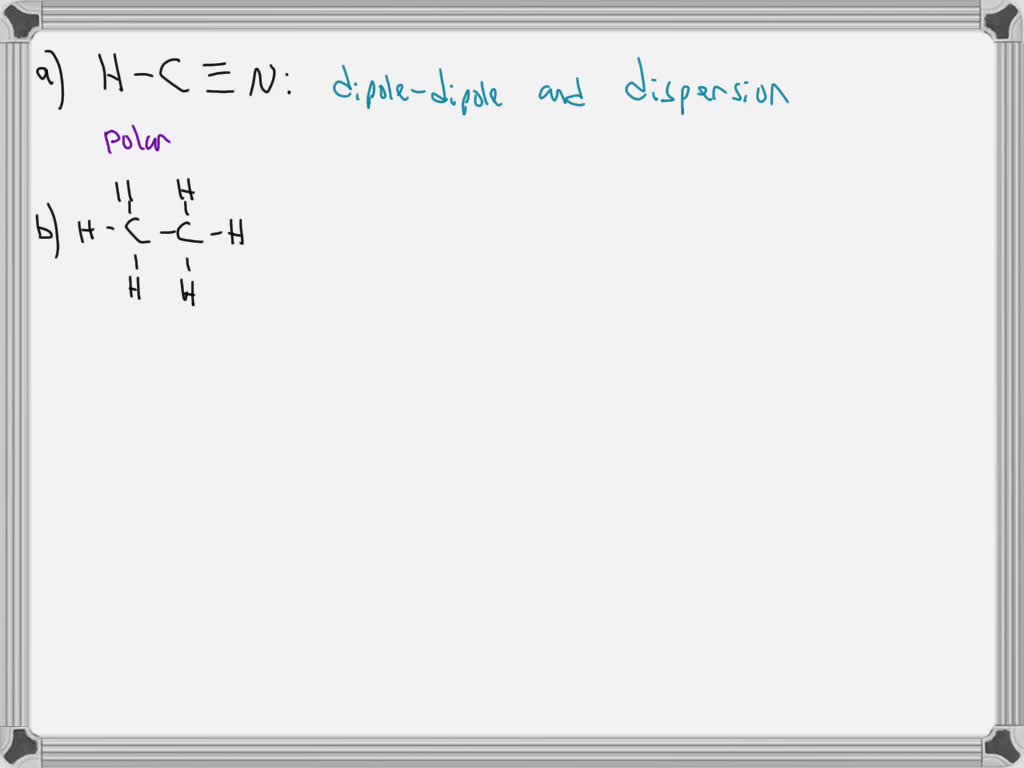
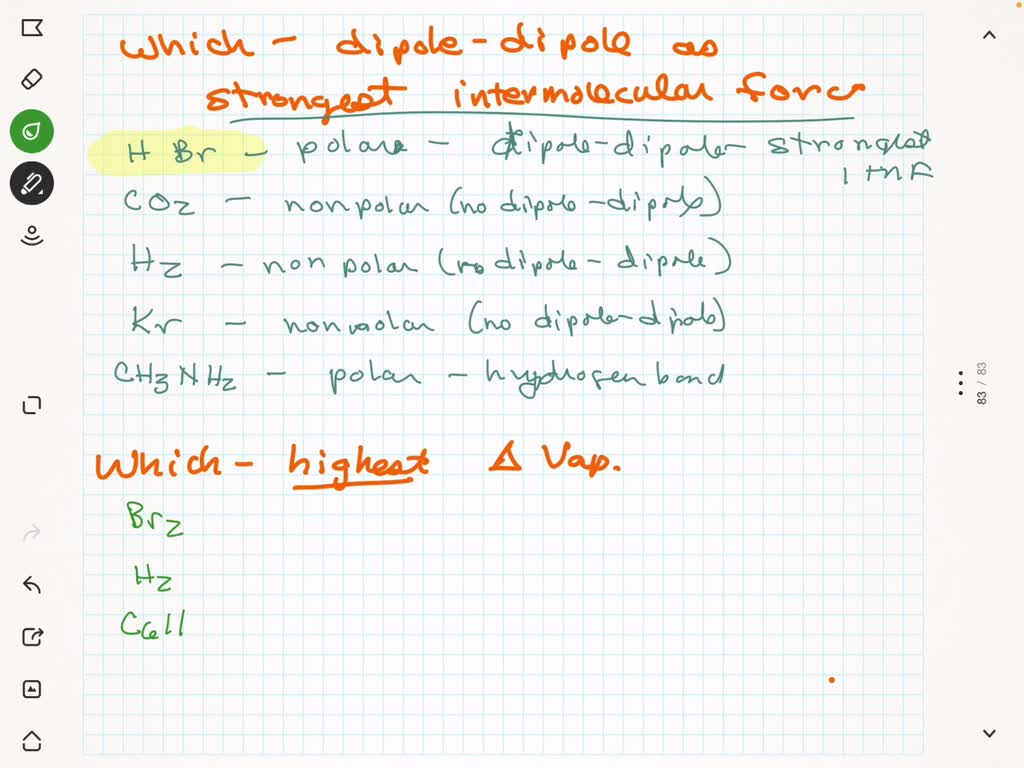
The major intermolecular forces include dipole-dipole interaction, hydrogen bonding, and London dispersion forces. Dipole-dipole interactions Polar molecules. 12.3: Intermolec...
C6H14 jest to alkan, który jest składnikiem wielu związków chemicznych. Siły międzycząsteczkowe mogą wpływać na właściwości fizyczne i chemiczne związku. Poniżej zostały wymienione typy sił międzycząsteczkowych, które są obecne w C6H14.
- Siły dipol-dipol
- Siły dipol-indukcyjne
- Siły jonowe
- Siły van der Waals
Siły dipol-dipol są rodzajem siły elektrostatycznej, która powstaje między cząsteczkami, które posiadają nierównomierne rozmieszczenie ładunków elektrycznych. Siły te powstają między cząsteczkami, które posiadają dipol elektryczny, a są one zazwyczaj słabe.
Siły dipol-indukcyjne są to siły elektrostatyczne, które powstają między cząsteczkami, które posiadają nierównomierne rozmieszczenie ładunków elektrycznych. Siły te są słabsze niż siły dipol-dipol, ale wpływają na właściwości fizyczne i chemiczne związku.
Siły jonowe są rodzajem siły elektrostatycznej, która powstaje między jonami, które mają różne ładunki elektryczne. Siły te są silniejsze niż siły dipol-dipol i dipol-indukcyjne i mogą wpływać na właściwości fizyczne i chemiczne związku.
Siły van der Waals są to siły międzycząsteczkowe, które powstają między cząsteczkami, które posiadają nierównomierne rozmieszczenie ładunków elektrycznych. Siły te są słabsze niż siły dipol-dipol, dipol-indukcyjne i jonowe, ale mogą mieć wpływ na właściwości fizyczne i chemiczne związku.
The major intermolecular forces include dipole-dipole interaction, hydrogen bonding, and London dispersion forces. Dipole-dipole interactions Polar molecules. 12.3: Intermolecular Forces in Action: Surface Tension and Viscosity; 12.4: Evaporation and Condensation; 12.5: Melting, Freezing, and Sublimation; 12.6: Types. Intermolecular forces present Relative order of boiling and melting points; Ionic compounds: Ion to ion attraction between ions, London dispersion forces: 1, highest).
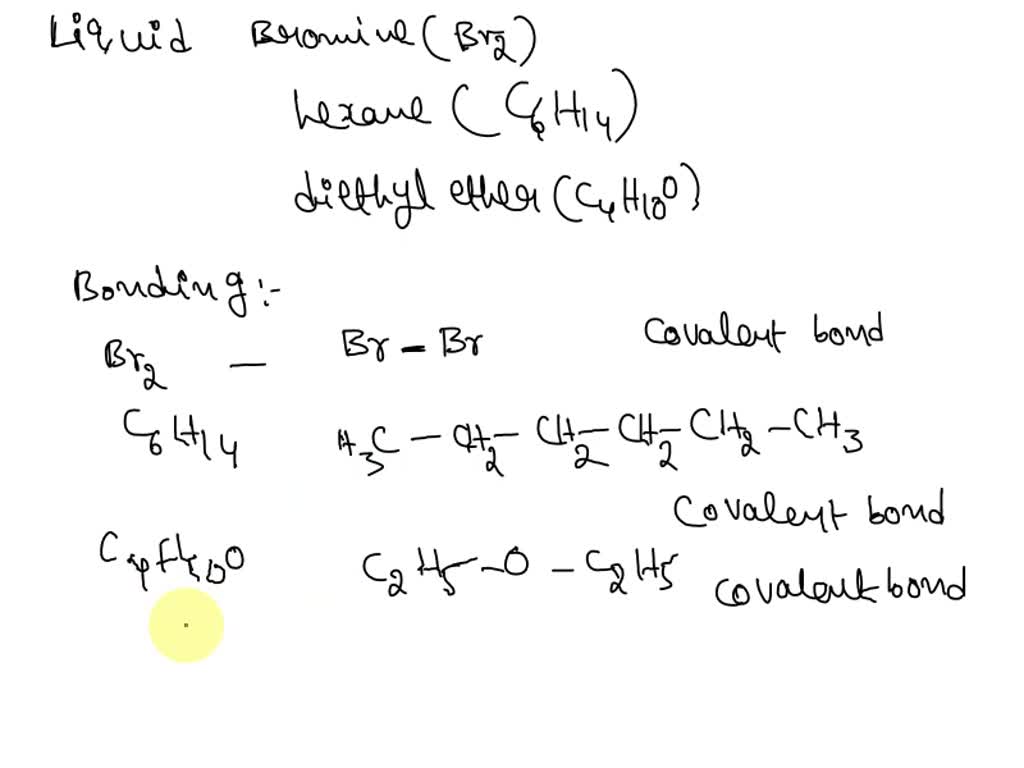
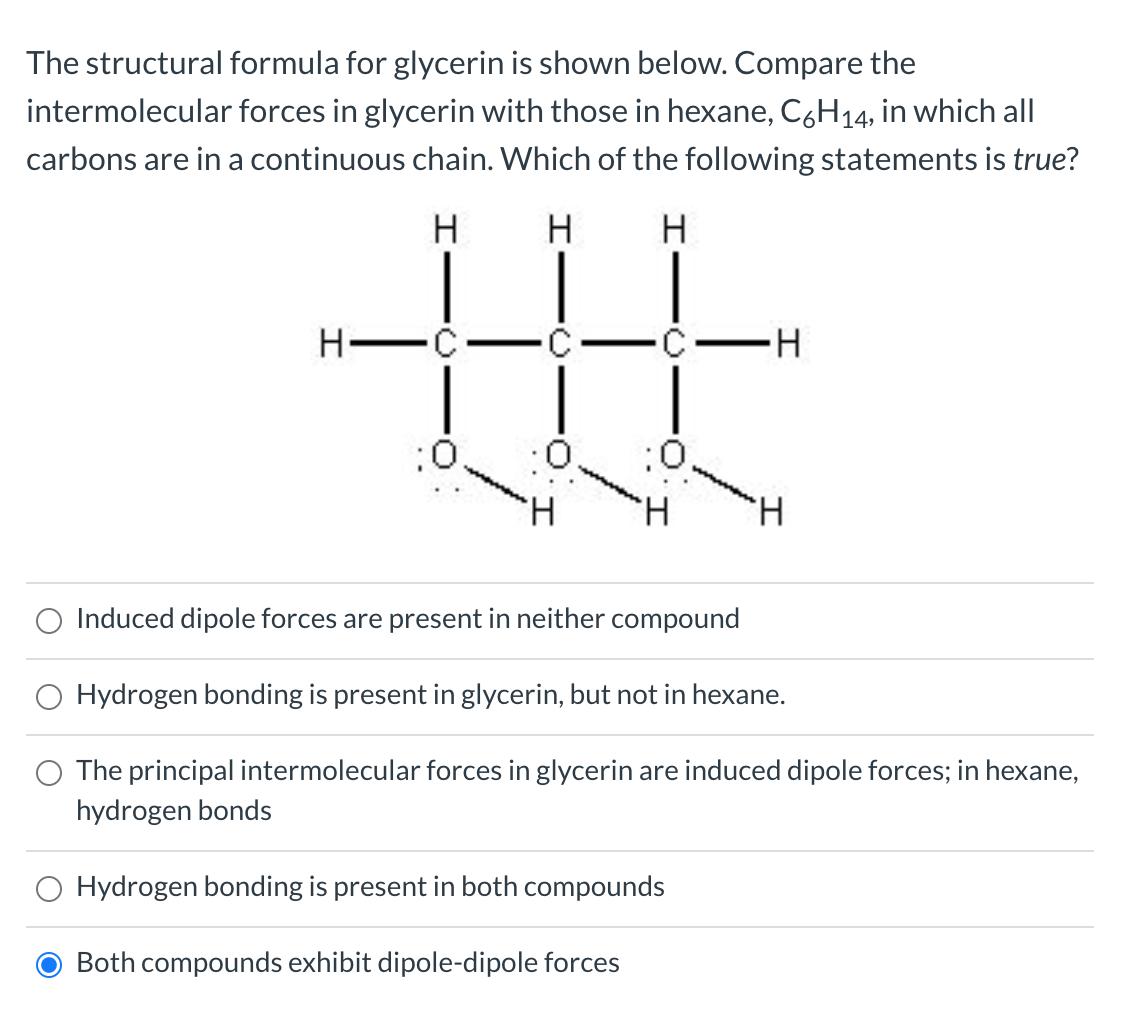
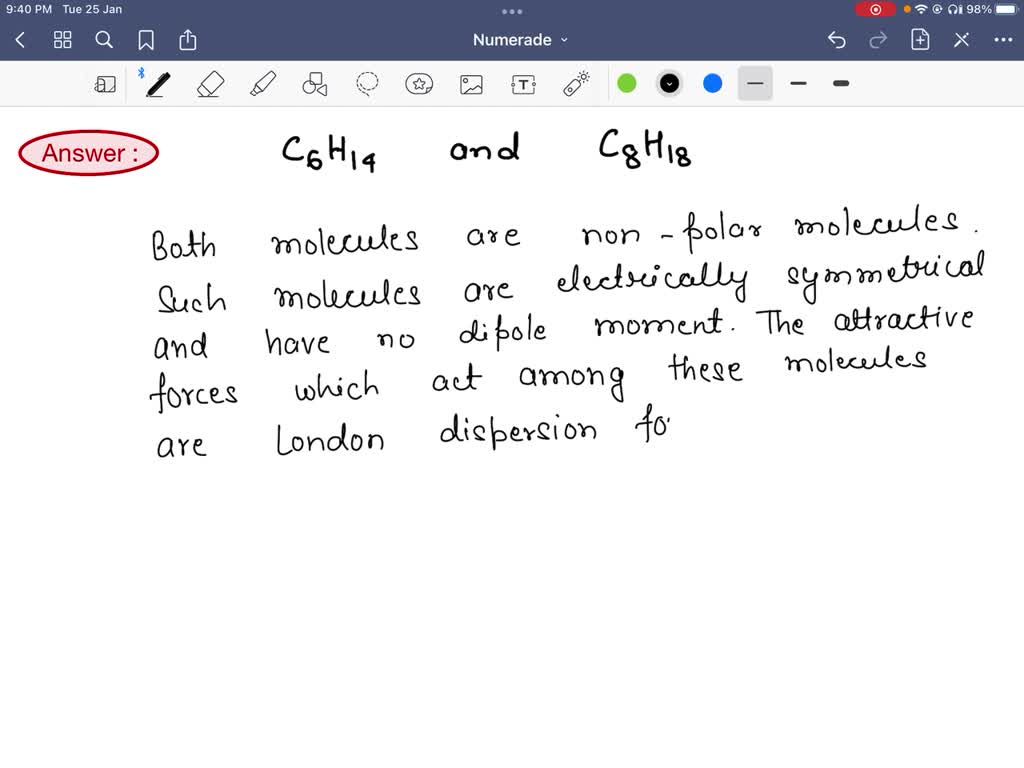
The intermolecular interactions include London dispersion forces, dipole-dipole interactions, and hydrogen bonding (as described in the previous section).. Identify the types of intermolecular forces present in C6H14? This problem has been solved! You'll get a detailed solution from a subject matter expert that helps you learn. What intermolecular forces are present in C6H14 H2O HCHO C6H5OH? C6H14 - dispersion forces H2O - hydrogen bonding, dipole, dispersion HCHO -.
The three main intermolecular forces are dipole-dipole interactions, hydrogen bonds, and London dispersion forces. These are the weaker forces that hold different. Identify the types of intermolecular forces present in C6H14 and C8H18 and select the substance of the pair that has the higher boiling point. a. LDF only for both;. Best Answer. Copy. C6H14 - dispersion forces. H2O - hydrogen bonding, dipole, dispersion. HCHO - dipole, dispersion. C6H5OH - hydrogen bonding,.
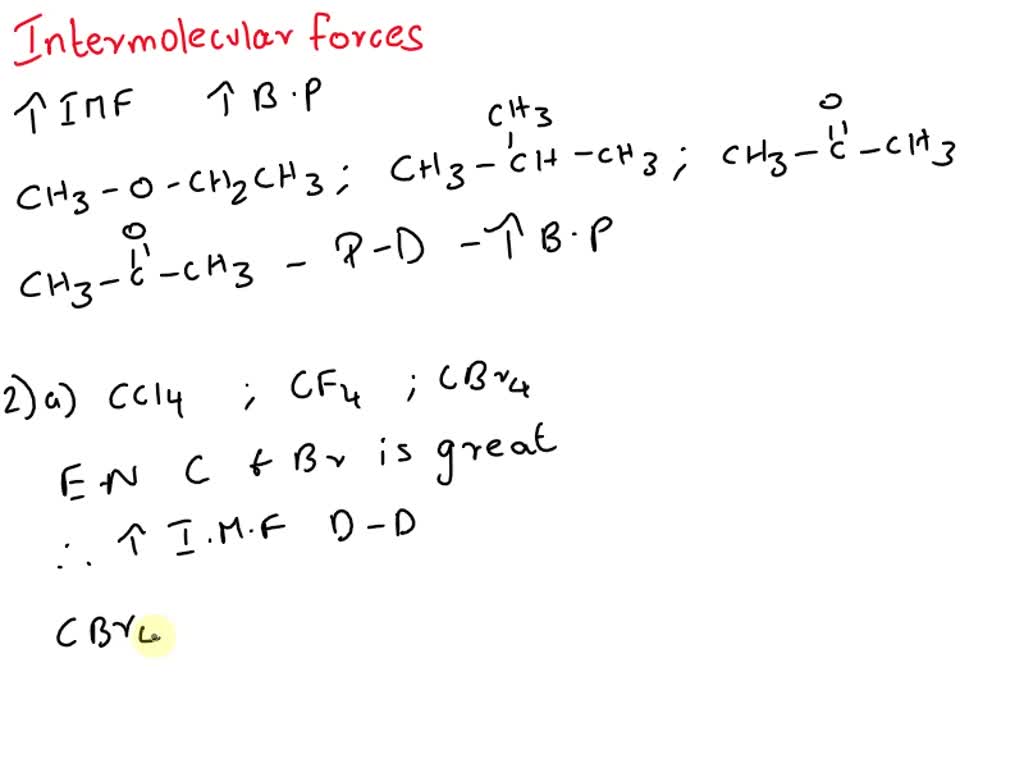
Identify the types of intermolecular forces present in thefollowing substances:a) C6H14 ,C8H18b) C3H8, CH3OCH3c) HOOH, HSSHd) NH2NH2 ,CH3CH3 This problem has. Identify the types of intermolecular forces present in C6H14 and C8H18 and select the substance of the pair that has the higher boiling point. a. LDF only for. Intermolecular forces are the forces that are between molecules. And so that's different from an intramolecular force, which is the force within a molecule. So a force within a.
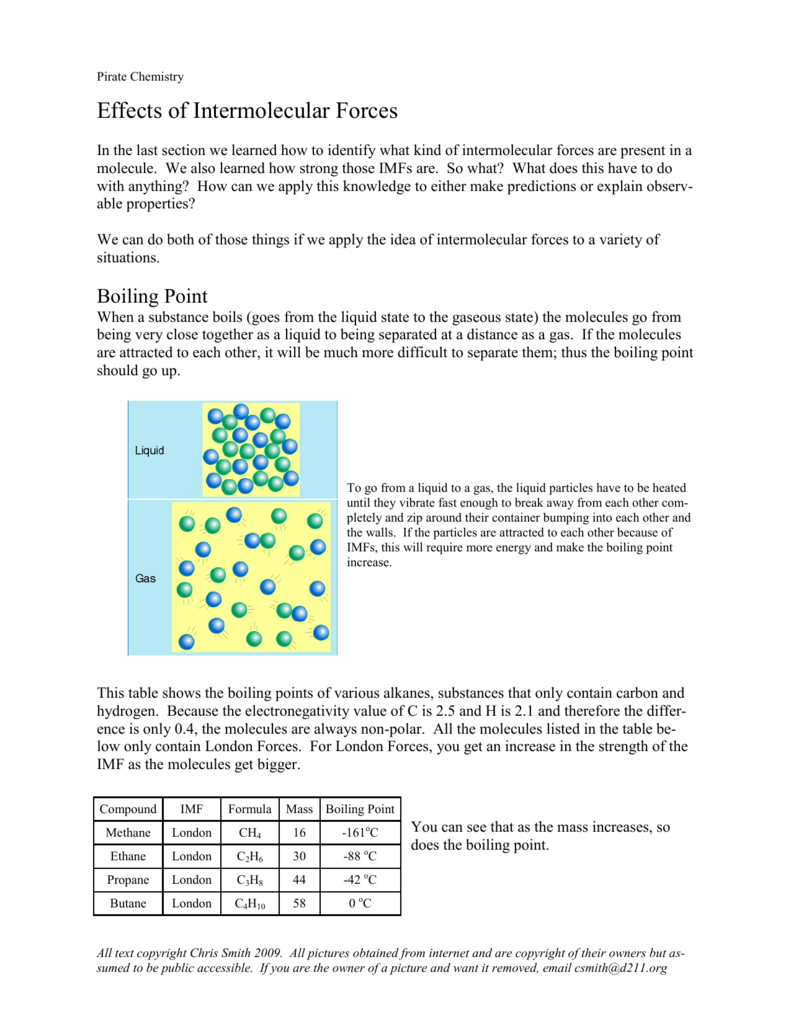
Determining the type of intermolecular forces present in different types of molecules; using intermolecular forces to rank molecules by their boiling points..