Python Duplicate List N Times

2. If the generated list is large, it can be better to use a generator, so that items are generated one at a time on the fly without creating the whole large list in memory:....
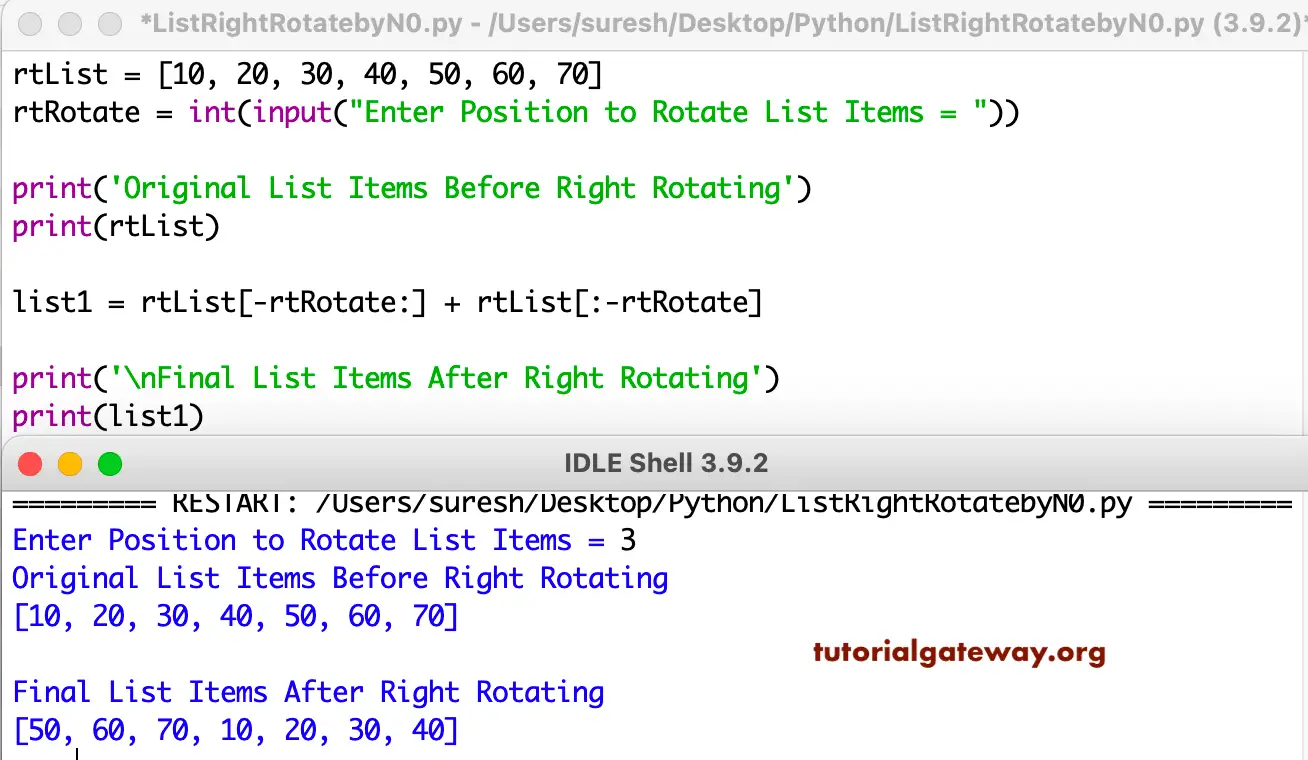
Python jest językiem programowania, który został zaprojektowany z myślą o ułatwieniu programowania. Jednym z jego wielu przydatnych narzędzi jest możliwość powielania list n razy. Ta technika jest bardzo przydatna, gdy chcesz utworzyć listę, która zawiera te same dane wiele razy.
Istnieje kilka różnych sposobów powielania list w Pythona. Oto kilka z nich:
- Metoda listy komprehensji
- Metoda wyrażenia lambda
- Funkcja repeat()
- Funkcja cycle()
- Funkcja chain.from_iterable()
Metoda listy komprehensji jest najprostszym sposobem powielania listy w Pythona. Wygląda ona następująco:
lista_powielana = [x for x in lista] * ile_razy
Gdy chcesz powielać listę, wstaw swoją listę w miejsce „lista”, a liczbę powtórzeń w miejsce „ile_razy”. Przykładowo, aby powielić listę [1, 2, 3] dwa razy, należy wpisać:
lista_powielana = [x for x in [1, 2, 3]] * 2
Wyrażenie lambda może również służyć do powielania listy w Pythona. Wygląda ono następująco:
lista_powielana = list(map(lambda x: x, lista)) * ile_razy
Jest to podobne do listy komprehensji, z wyjątkiem tego, że wymaga użycia funkcji map() i wyrażenia lambda. Przykładowo, powtórzenie listy [1, 2, 3] dwa razy wymaga wpisania:
lista_powielana = list(map(lambda x: x, [1, 2, 3])) * 2
Funkcja repeat() jest kolejnym narzędziem do powielania listy w Pythona. Wygląda ona następująco:
lista_powielana = list(itertools.repeat(lista, ile_razy))
Funkcja repeat() jest bardziej złożona niż poprzednie metody, ponieważ wymaga użycia modułu itertools. Przykładowo, powtórzenie listy [1, 2, 3] dwa razy wymaga wpisania:
lista_powielana = list(itertools.repeat([1, 2, 3], 2))
Funkcja cycle() jest podobna do funkcji repeat(), ale pozwala powtarzać listę w nieskończoność. Wygląda ona następująco:
lista_powielana
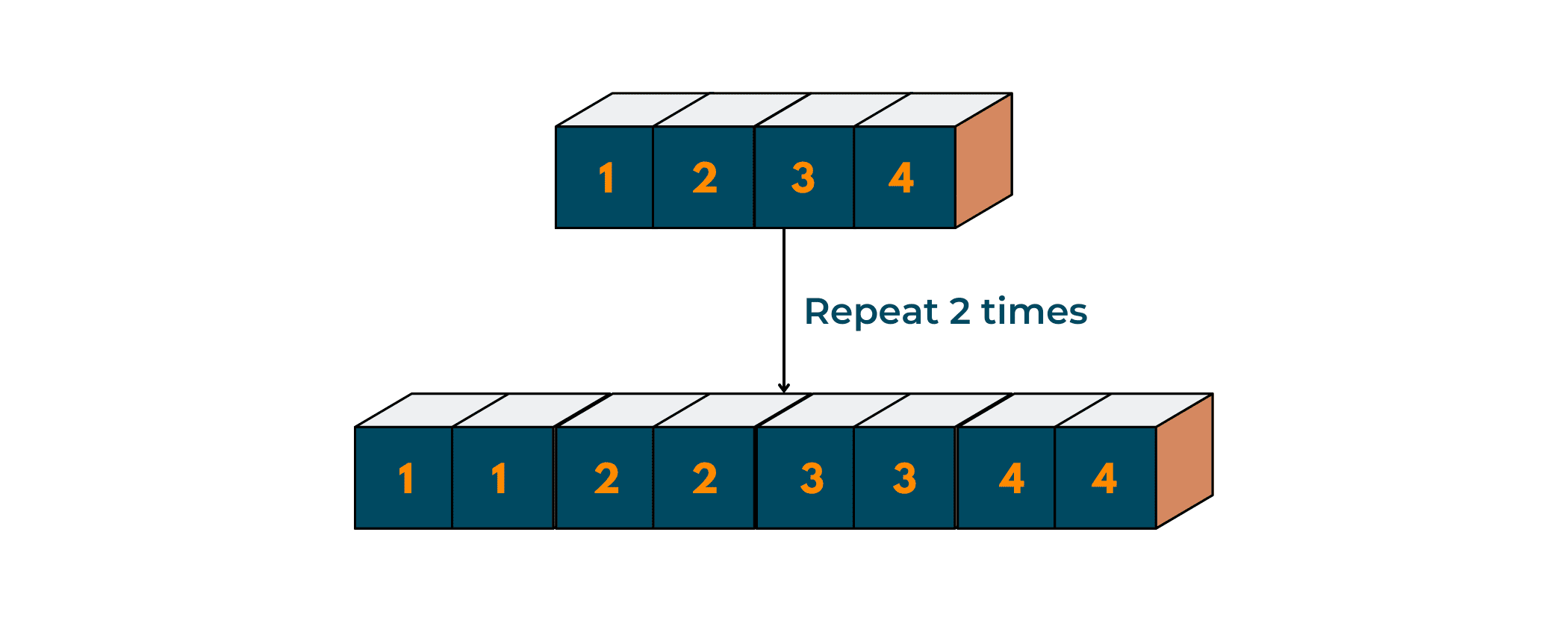
2. If the generated list is large, it can be better to use a generator, so that items are generated one at a time on the fly without creating the whole large list in memory:. First, you learned how to identify duplicate elements and how to count how often they occur. You then learned how to remove duplicate elements from a list. I have a list [0, 1, 2, 3, 4, 5, 6, 7, 8, 9] and I want to repeat a list n times. For example, if n = 2 I want [0, 1, 2, 3, 4, 5, 6, 7, 8, 9, 0, 1, 2, 3, 4, 5, 6, 7, 8, 9] as.
Python module itertools has a function called repeat, which can be used to get a list repeating single element n times. If we want to create a list repeating. To check if a list contains any duplicate element follow the following steps, Add the contents of list in a set. As set contains only unique elements, so no duplicates will be. The rep () function is a built-in function in R that allows you to repeat elements, including list objects, N times. The function has the following syntax: rep ( x, times) Where: x:.
How to Iterate N times in Python? Let's take a look at some methods to repeat in python programming Also, note that we're going to address many questions. numpy.repeat. #. Repeat elements of an array. Input array. The number of repetitions for each element. repeats is broadcasted to fit the shape of the given axis. The axis along. I am simply trying to replicate an input list n times (where n varies) into a single list. I can obviously create what I want using List.Create if I manually input the.
numpy.repeat ¶. numpy.repeat. ¶. Repeat elements of an array. Input array. The number of repetitions for each element. repeats is broadcasted to fit the. In Python, you can create a list by enclosing a sequence of values in square brackets [], separated by commas. Here are some examples: ... To create a list of a single item.