Which Reagents Will Achieve The Following Transformation

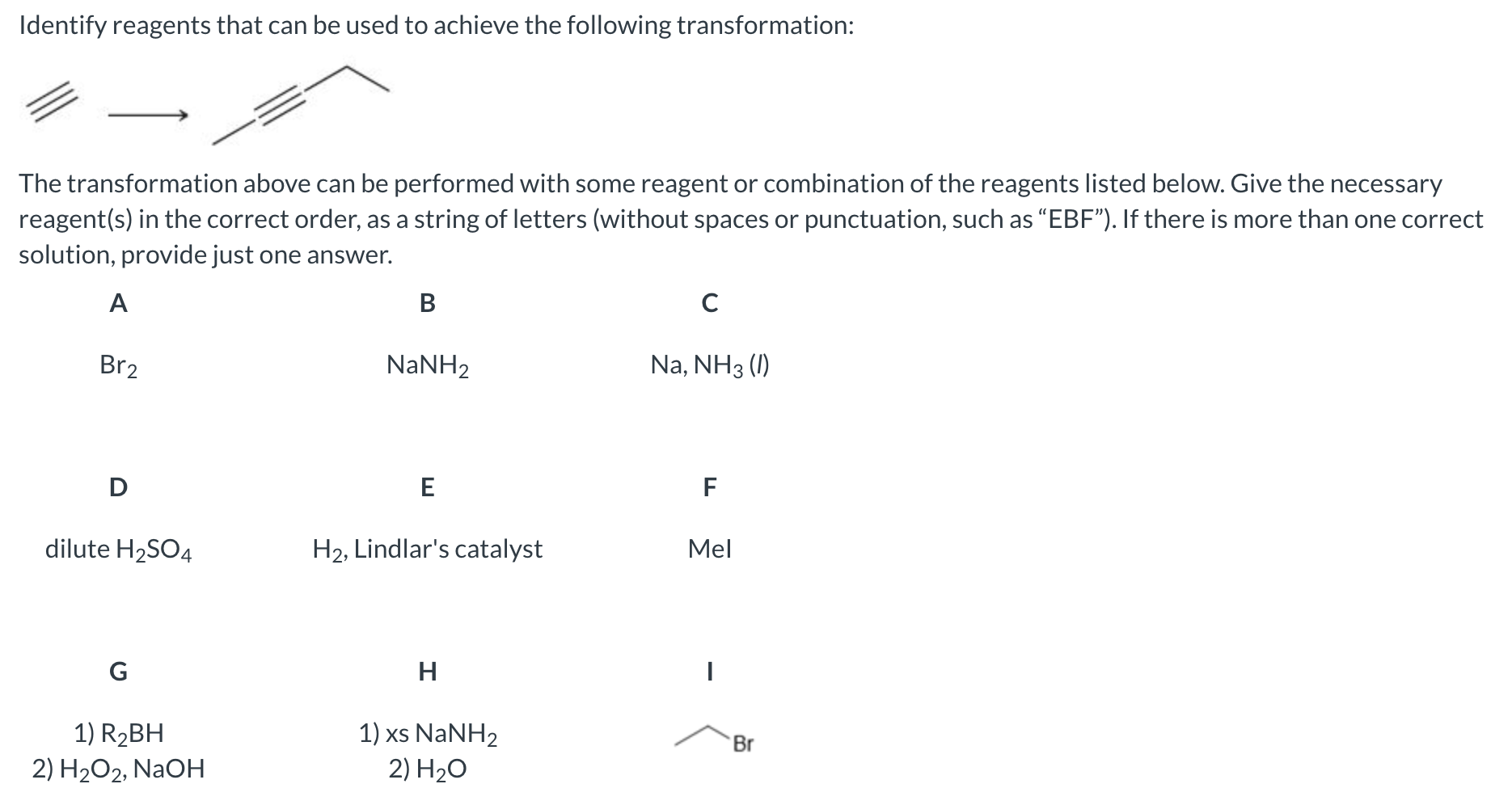
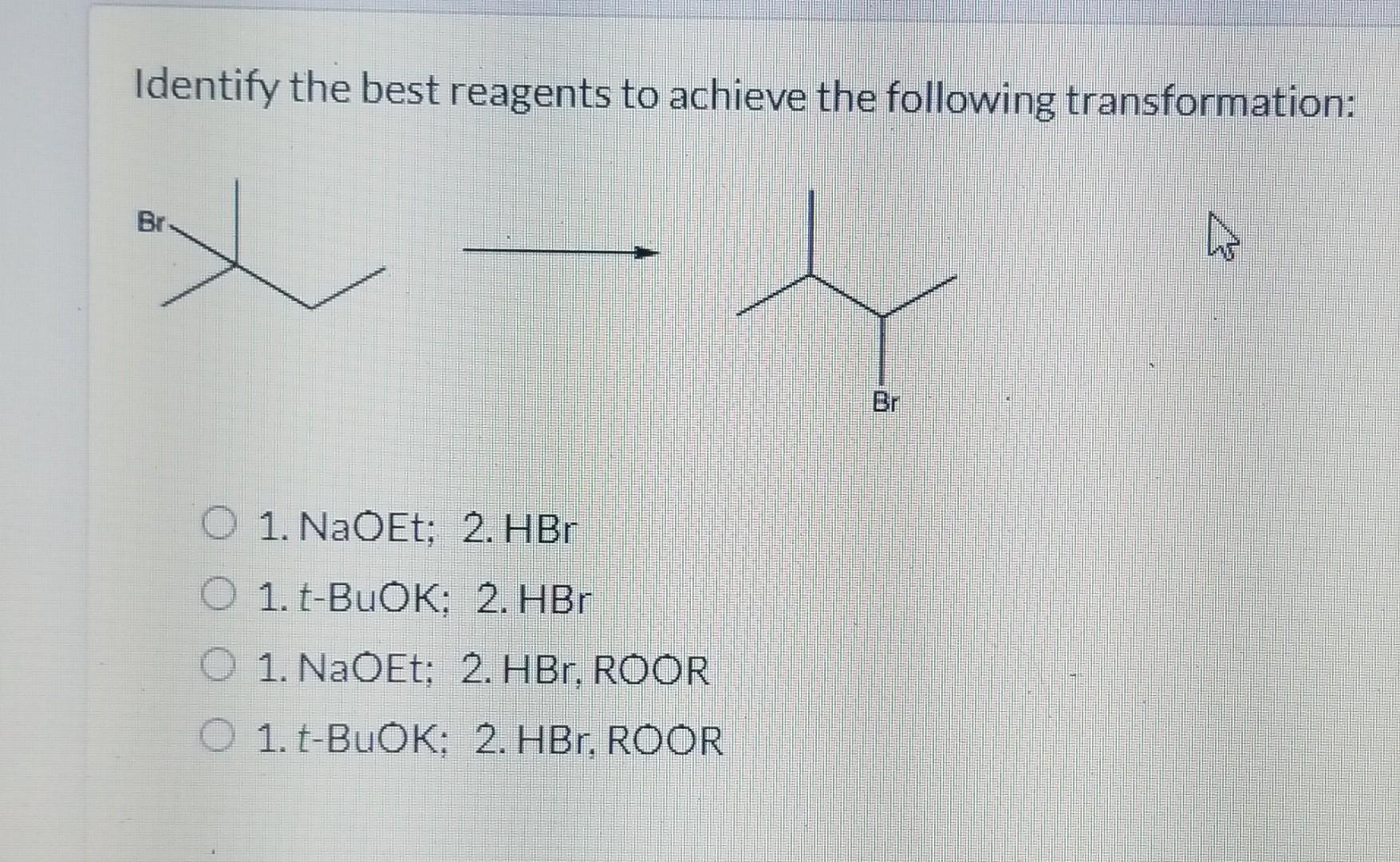
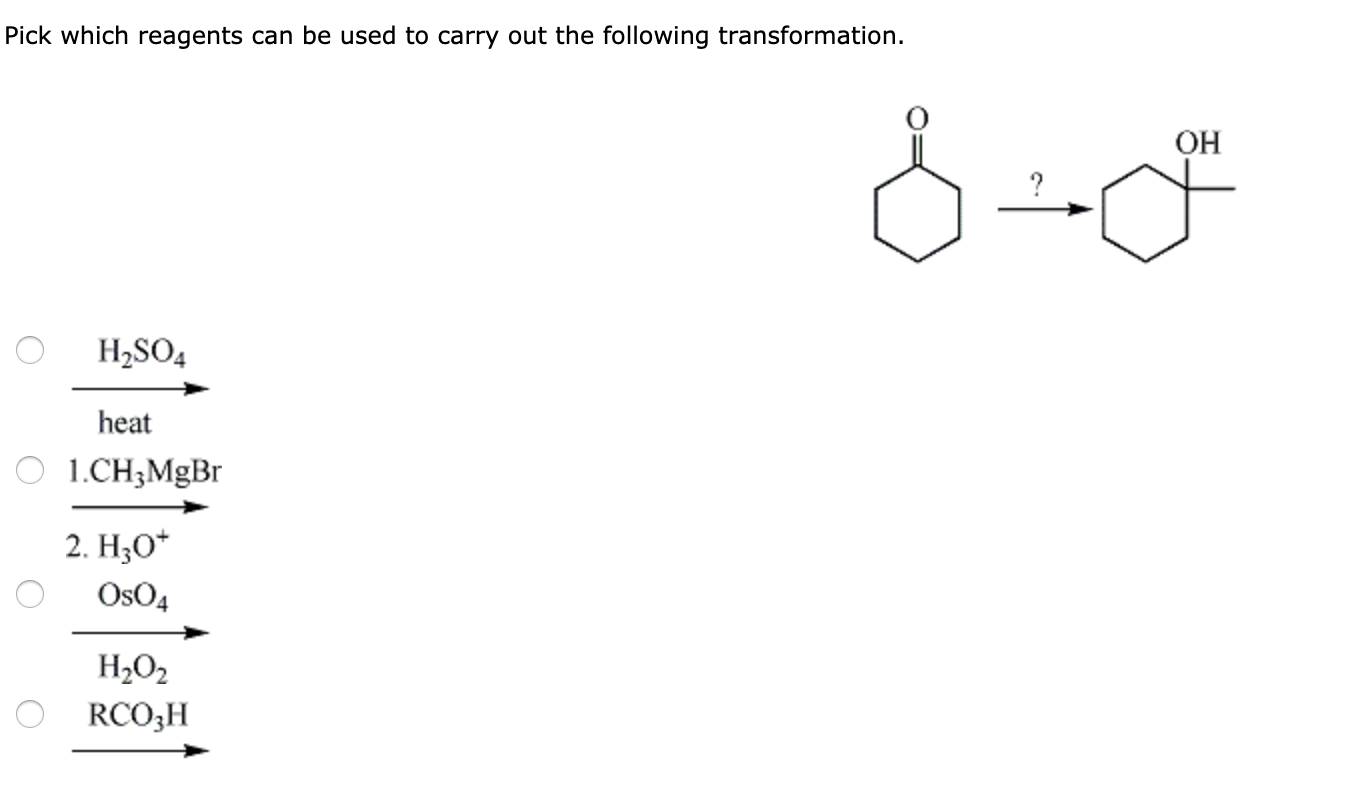
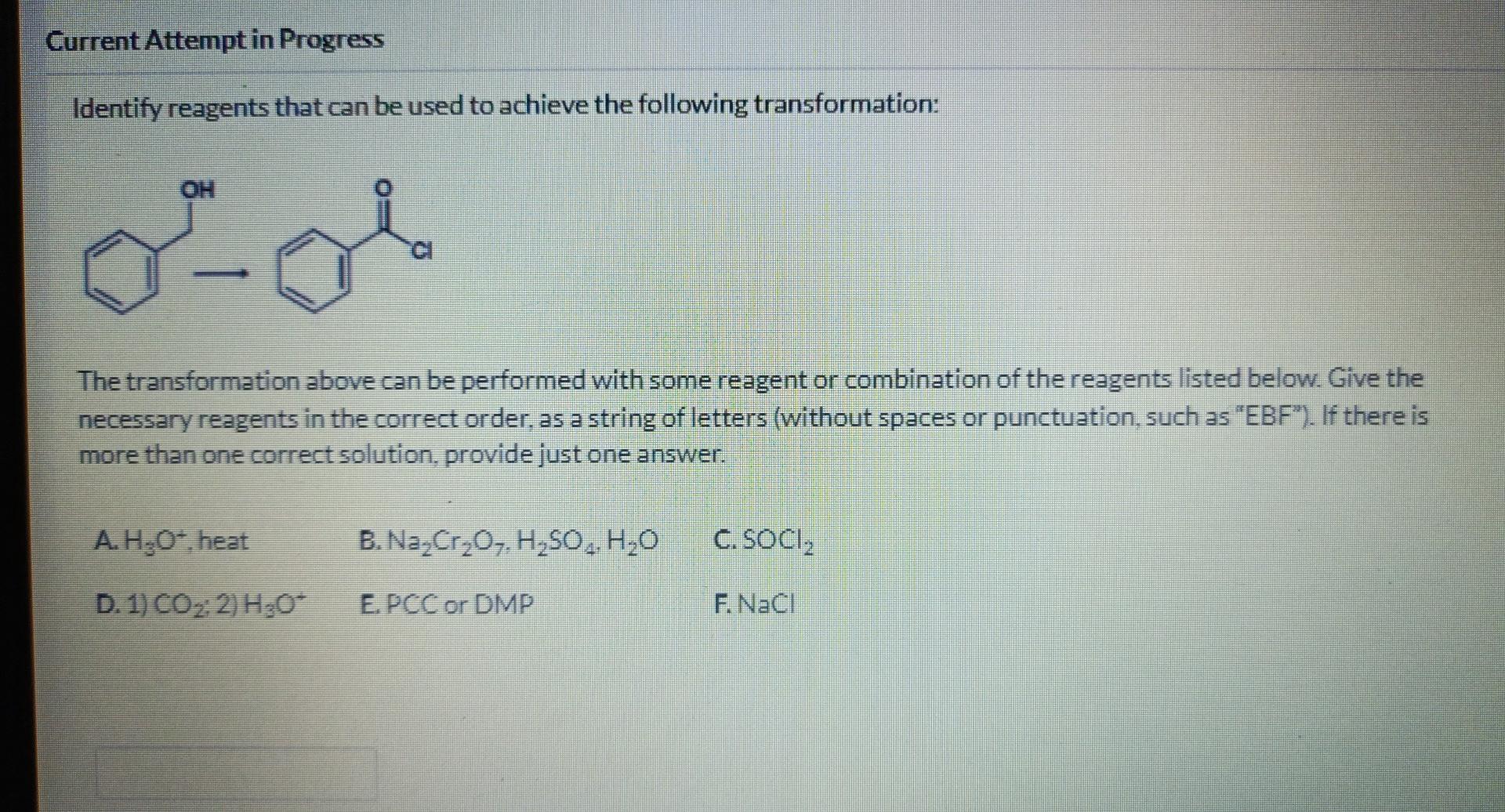
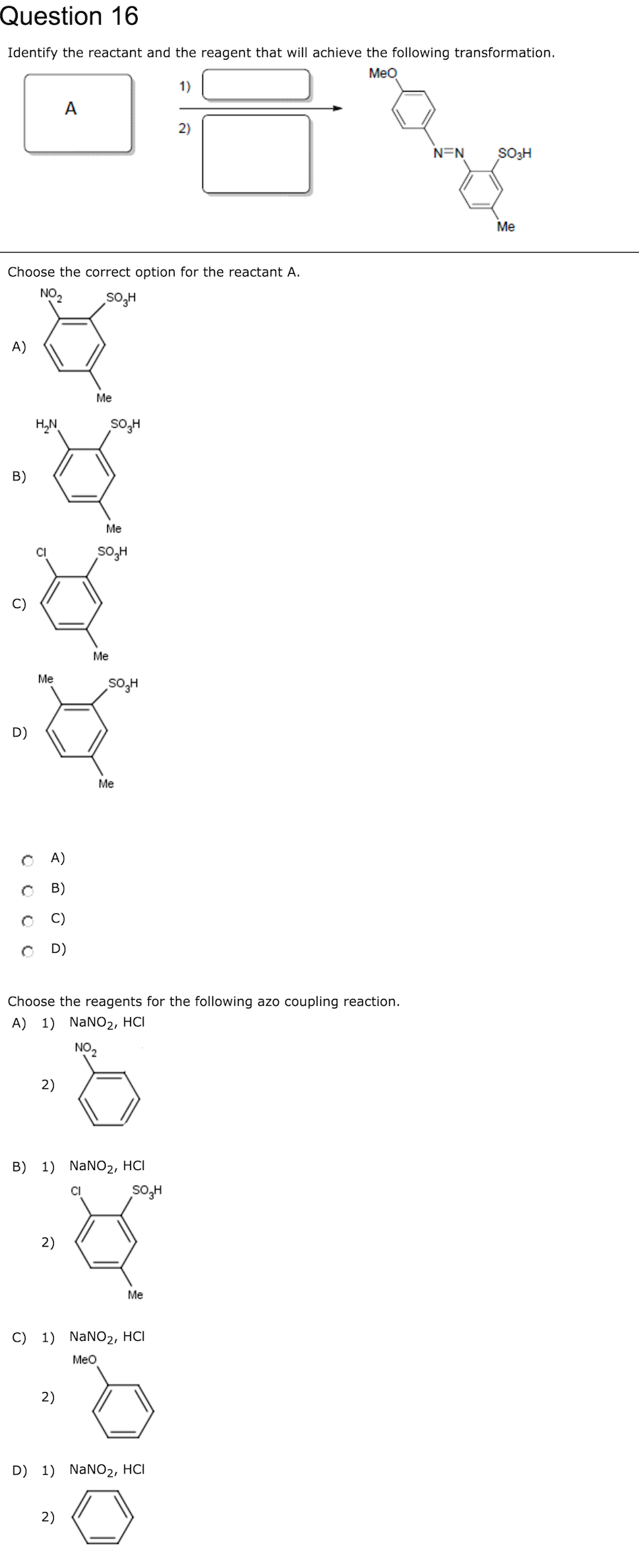
What is the best choice of reagent(s) to perform the following transformation? 3 What is the major organic product obtained from the following reaction? 3 What is the major. W...
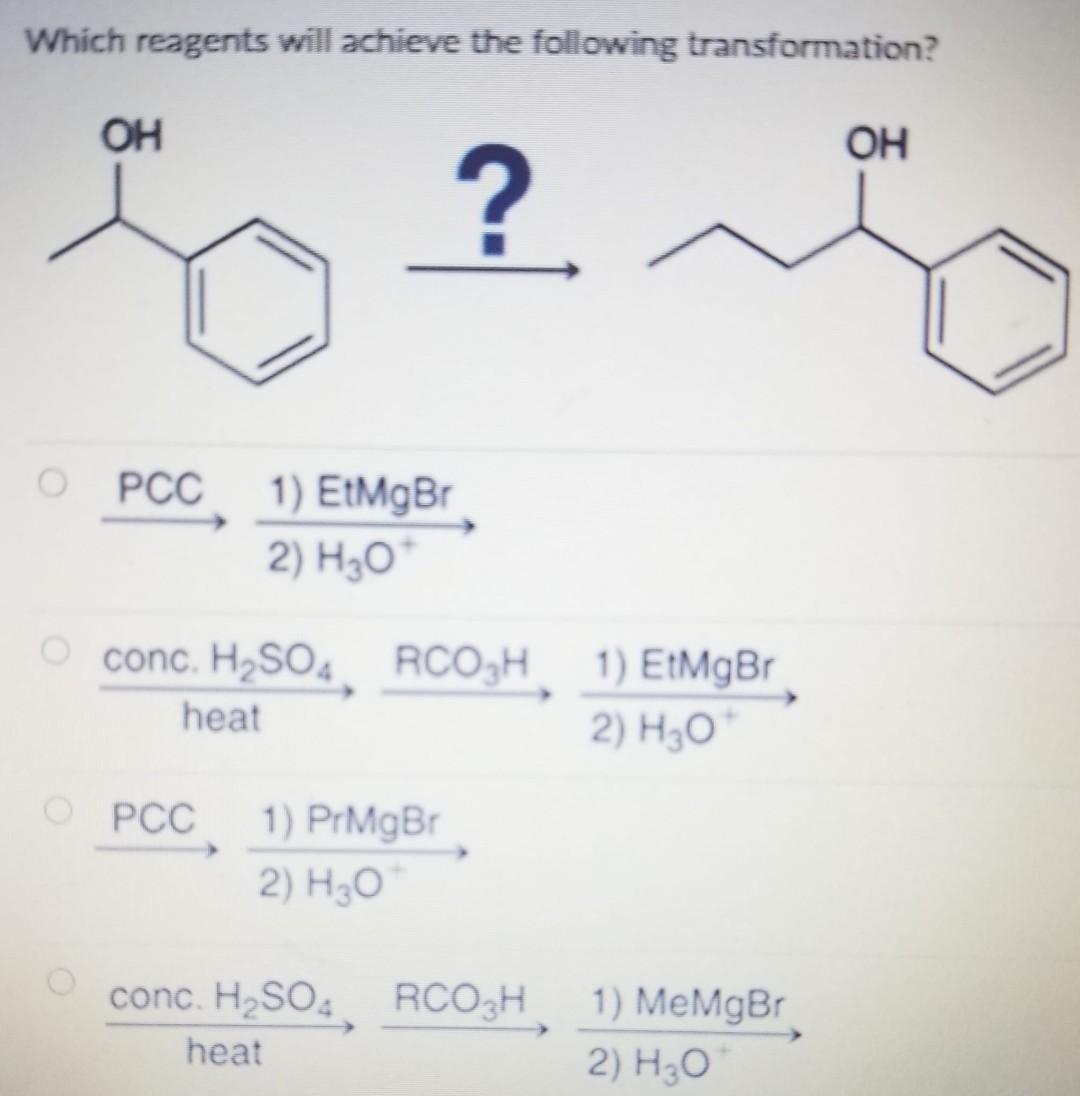
Które reagencje osiągną następującą transformację? W celu osiągnięcia pożądanego rezultatu, należy wiedzieć, jakie reagencje trzeba użyć. Oto podstawowe wyjaśnienie, które reagencje będą potrzebne do osiągnięcia zamierzonego efektu:
1. Dla początkowego działania, trzeba użyć wodorotlenku sodu (NaOH) w celu przeprowadzenia procesu saponifikacji. W tym kroku, estry są rozkładane do kwasów karboksylowych.
2. Drugim krokiem będzie użycie wodorotlenku magnezu (Mg(OH)2) w celu przeprowadzenia procesu esterifikacji. W tym kroku, kwasy karboksylowe są przekształcane w estry.
3. Trzecim krokiem będzie użycie zasady chlorowodorowo-potasowej (KOH) w celu przeprowadzenia procesu odwodornienia. W tym kroku, estry są przekształcane w alkohole.
4. Czwartym krokiem będzie użycie kwasu szczawiowego (H2SO4) w celu przeprowadzenia procesu konwersji estrów w węglodowany. W tym kroku, estry są przekształcane w węglodowany.
5. Piątym krokiem będzie użycie sodu (Na) w celu przeprowadzenia procesu hydrolizy. W tym kroku, węglodowany są przekształcane w kwasy karboksylowe.
6. Szóstym krokiem będzie użycie wodorotlenku potasu (KOH) w celu przeprowadzenia procesu esterifikacji. W tym kroku, kwasy karboksylowe są przekształcane w estry.
7. Ostatnim krokiem będzie użycie chlorowodorku sodu (NaCl) w celu przeprowadzenia procesu hydroformylacji. W tym kroku, estry są przekształcane w aldehydy.
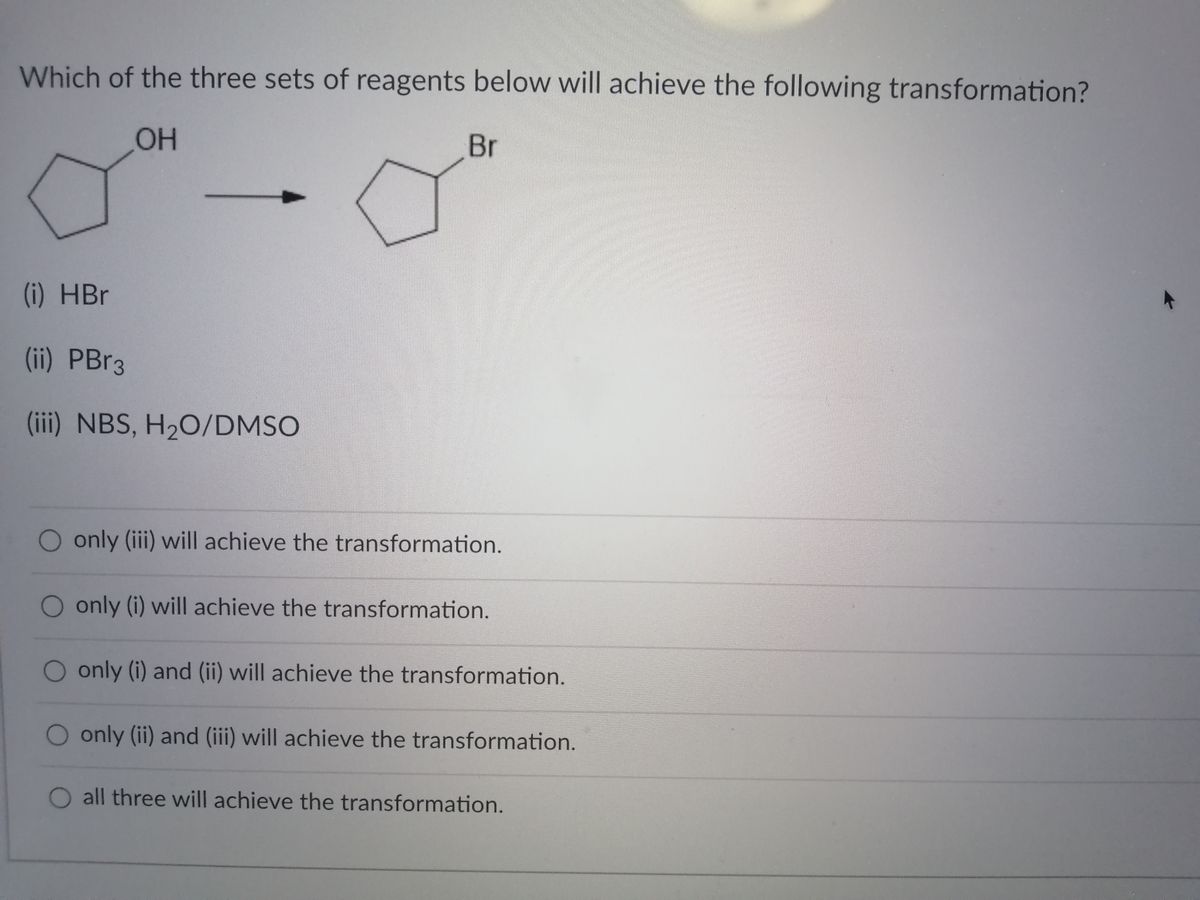
What is the best choice of reagent(s) to perform the following transformation? 3 What is the major organic product obtained from the following reaction? 3 What is the major. What reagent(s) will best accomplish the following transformation? Reduction of carbonyl compounds : The reduction of carbonyl compounds means to remove the oxygen. Identify reagents that can be used to achieve the following transformation: Br The transformation above can be performed with some reagent or combination of the.
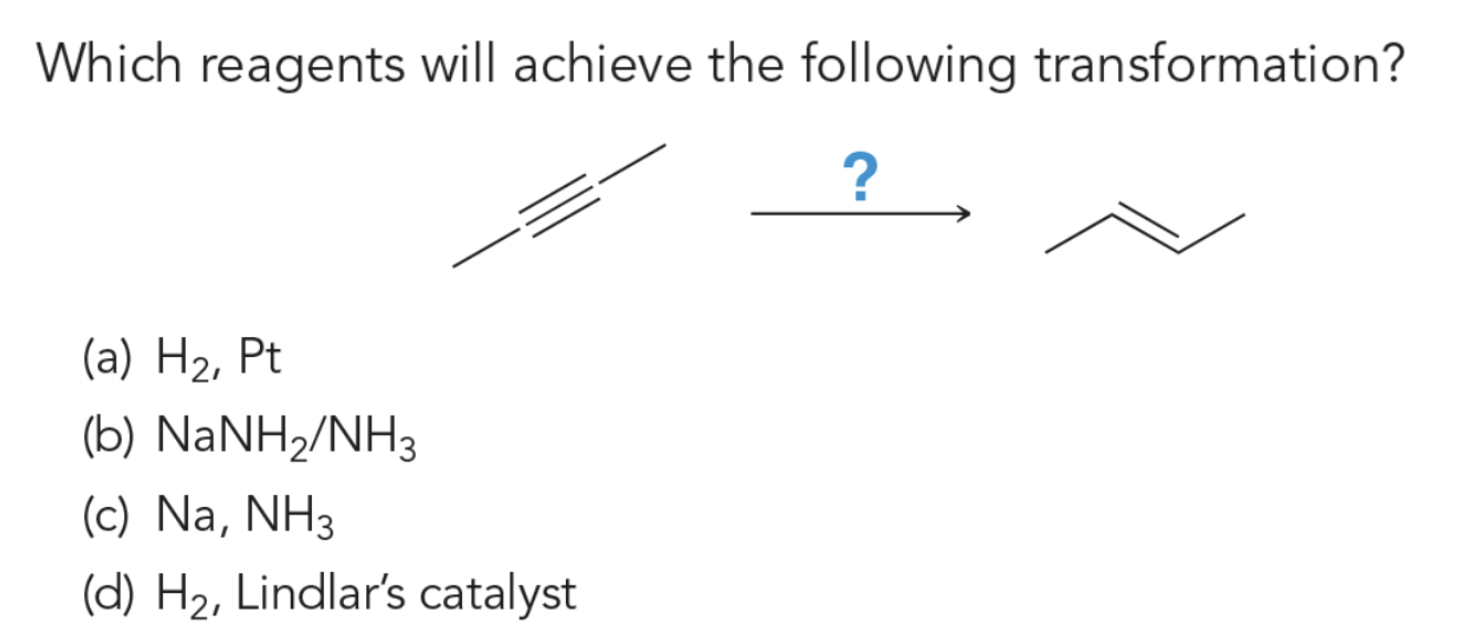
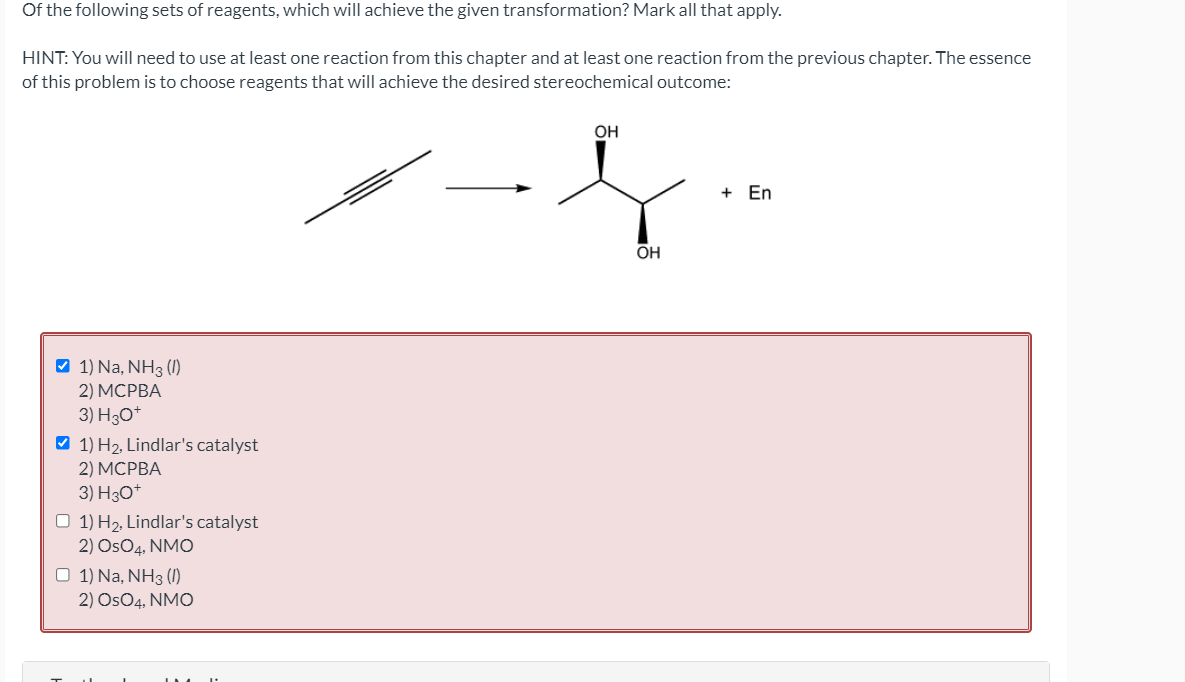
Step-by-step explanation. Na,Nh3 will convert alkyne to trans alkene. partial reduction with anti addition. Image transcriptions. 1715 Na 4X - WH 2 Na donates e and then e. What reagents will achieve the following transformation? 1. ( M_{g}: 2 . D_{2} O ) [ mathrm{H}_{2} mathrm{SO}_{4} / mathrm{D}_{2} mathrm{O} ]... | solutionspile.com The given transformation can be achieved in two steps as described below. Step 1: Hydrogenation of a triple bond by H 2 /Lindlar's catalyst to produce a cis-alkene..
1) We have a ketone and we want to reduce it to an alcohol. We can use NaBH4 or LiAlH4 to achieve this transformation. Step 2/3 2) We have a nitro group and we want. The correct sequence of correct reagents for the following transformation is :-(1) (i) Fe, HCl (ii) Cl 2, HCl, (iii) NaNO 2, HCl, 0°C (iv) H 2 O/H + (2) (i) Fe, HCl (ii). Expert Answer. In the following reaction, If we use Br2/H2O then, Br will add to the one carbon (C1) and OH group will add to the other carbon (C2) of the alkyne group. So,.
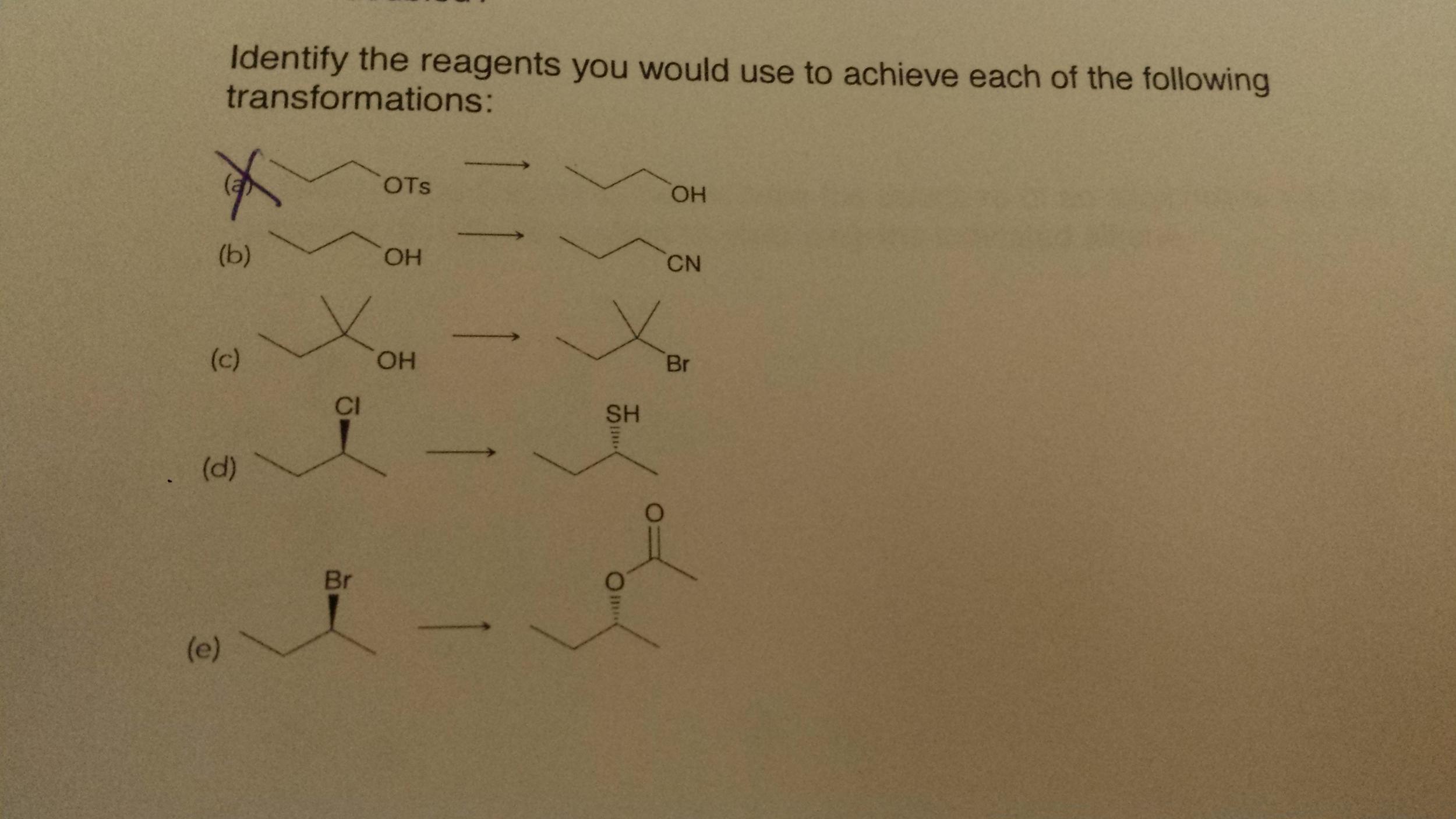
Provide a systematic name for the following compound. 2-methyl-3-hexyne. Provide a systematic name for the following compound. 3-octyne. Provide a systematic name for. The MCAT is a rigorous exam that requires months of planning in order to achieve a great score. It is recommended that you begin your study schedule 3. Q: A chemist was attempting to achieve the following transformation: Mass spectrometry was; Q: Identify the reagents you would use to achieve the following transformation:.
Correct option is A) In the given transformation, NH 2−NH 2,OH is the most appropriate regent. Because in this regent the medium is basic so it will not have any effect on.